On the 25th anniversary of its release, Faversham creative pair Julia Woolf and Sim Evan-Jones retell the story of working on one of the world’s most recognisable films

“We’re going to set up this special project - would you like to be in on it?”
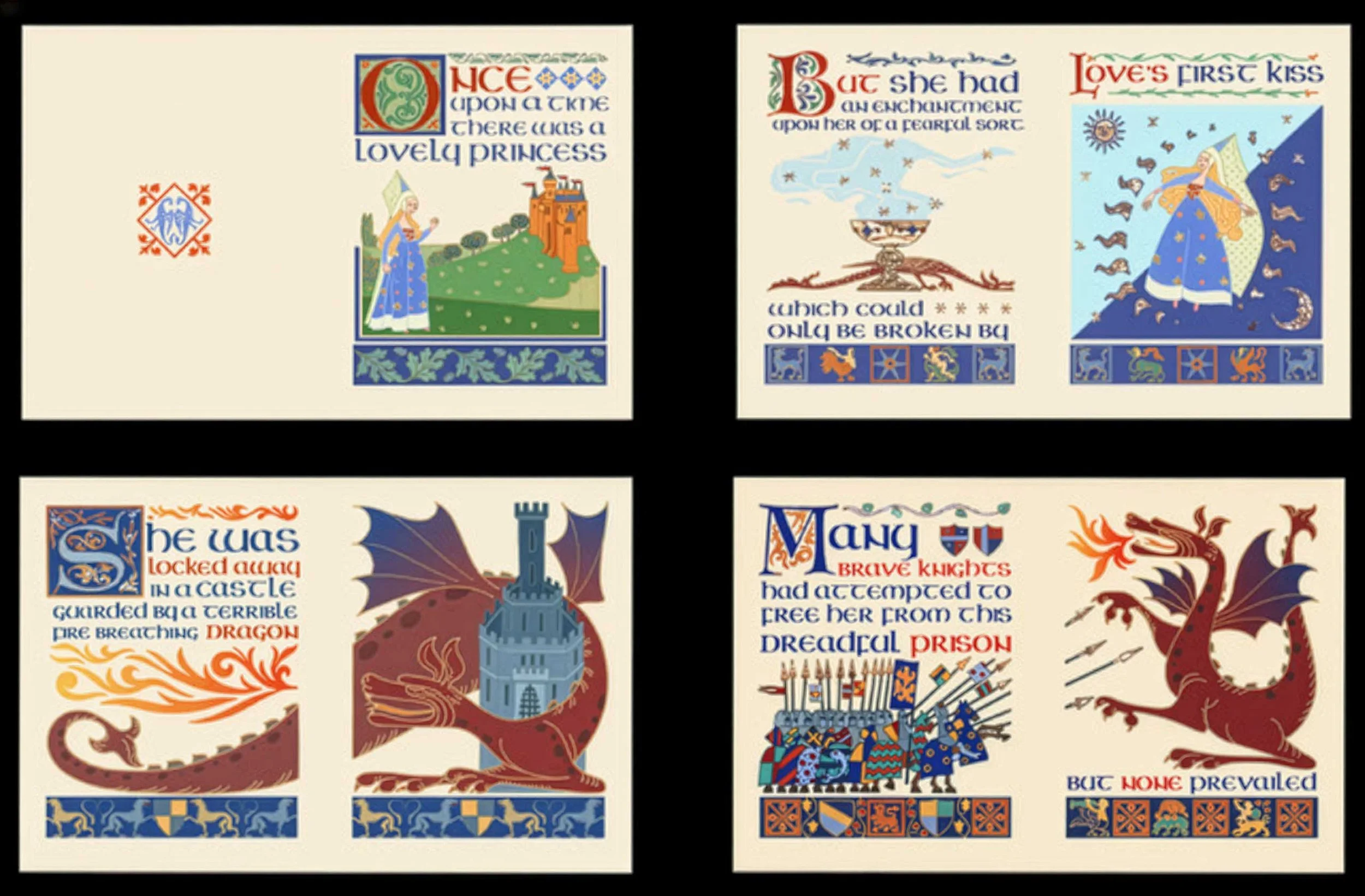
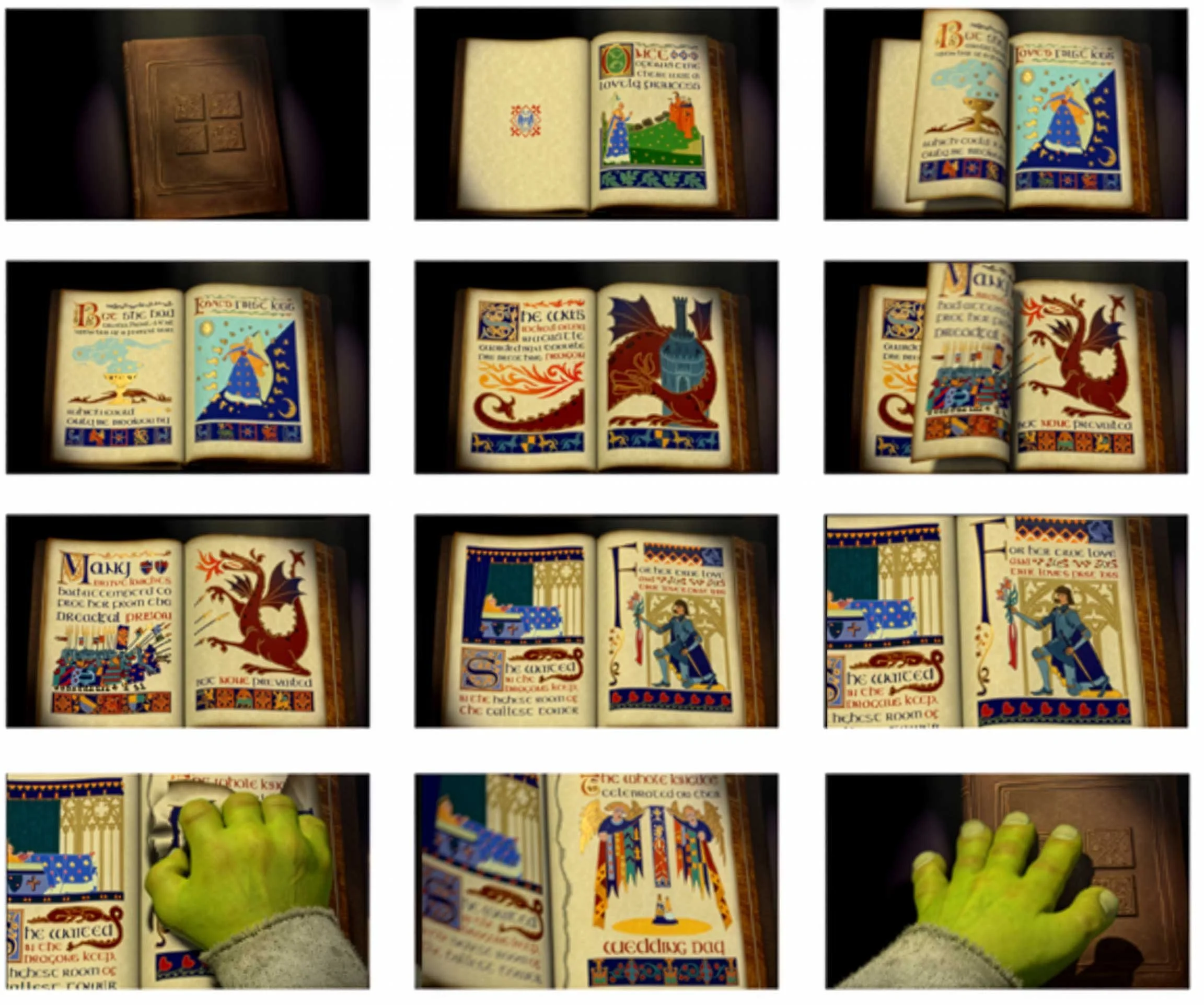
Opening sequence of Shrek / illustrations BY JULIA WOOLF
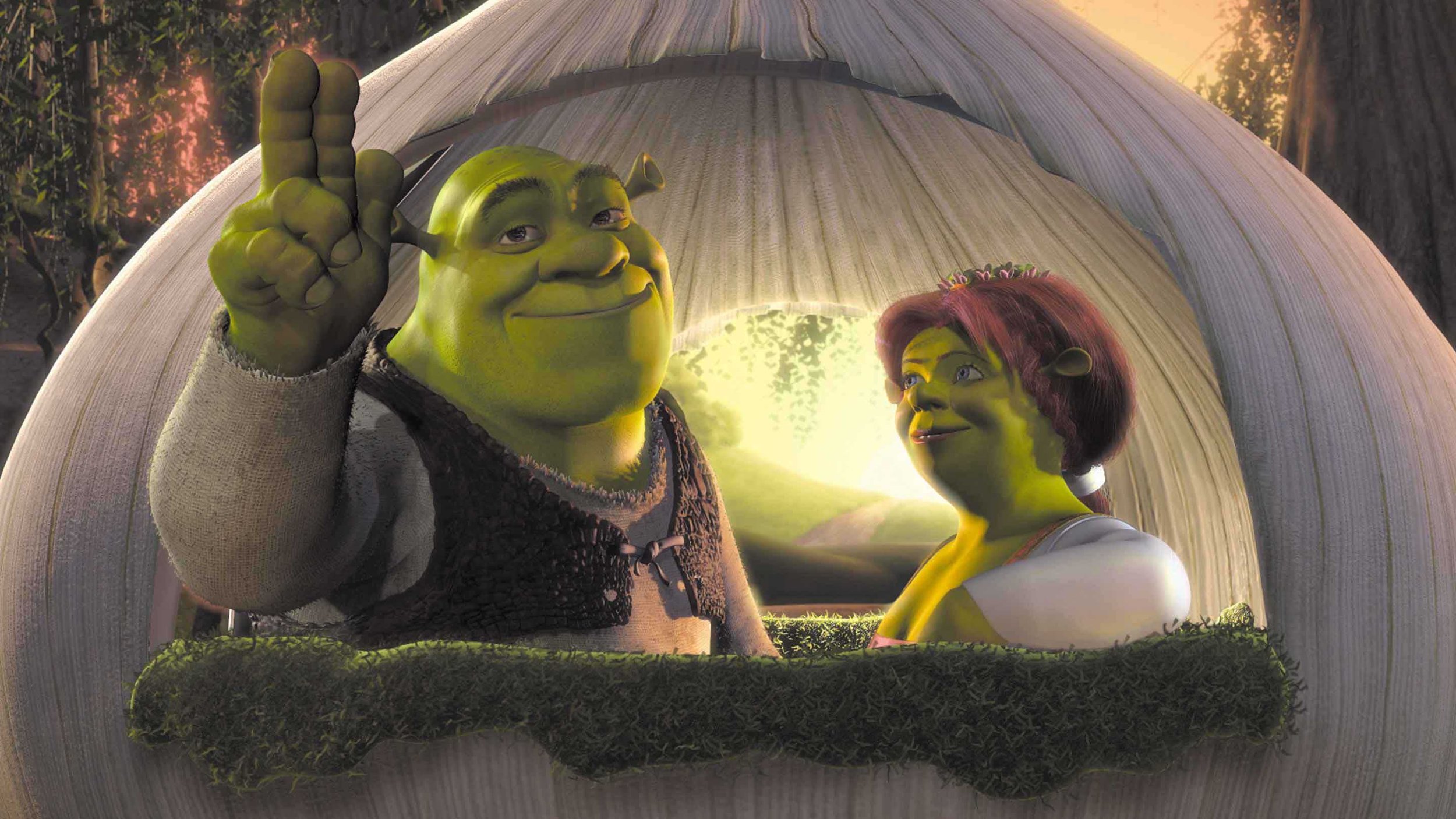
Once upon a time, long before an ogre with a Scottish lilt captured the hearts of millions, there was a film that nobody really believed in.
A cultural landmark now approaching its 25th anniversary, Shrek was something else entirely. A misfit. A risk. A green sheep of the family.
Back in the late 90s, animation was changing. Toy Story had begun nudging the industry away from traditional cartoon aesthetics toward something new. But that future wasn’t guaranteed. It certainly wasn’t safe. And it definitely didn’t look like Shrek.
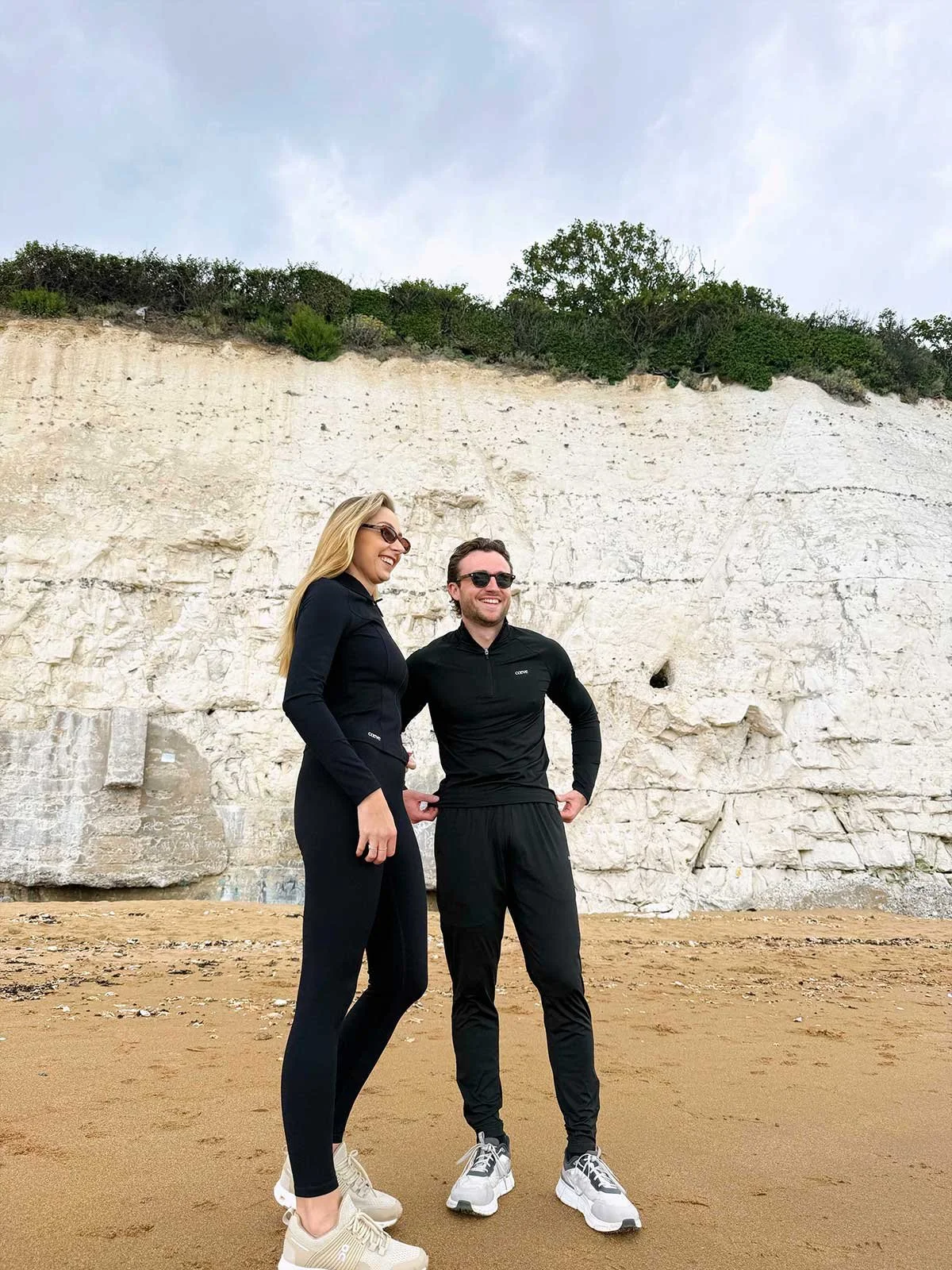
At the centre of this unlikely story were two creatives: illustrator Julia Woolf and film editor Sim Evan-Jones. A couple who would not only be part of building an iconic film, but a life together - one that would take them from London to Los Angeles, and eventually back home to Faversham, Kent.
But before the green carpet premieres, academy awards and Eddie Murphy’s underground bowling alley, there was a leap.
“We were working together in a studio in London,” Julia recalls. It was the kind of place where careers were built in fragments - commercial gigs, feature films, Soho energy. She had already worked on major projects, including Who Framed Roger Rabbit and Fern Gulley: The Last Rainforest, moving between worlds of animation and advertising.
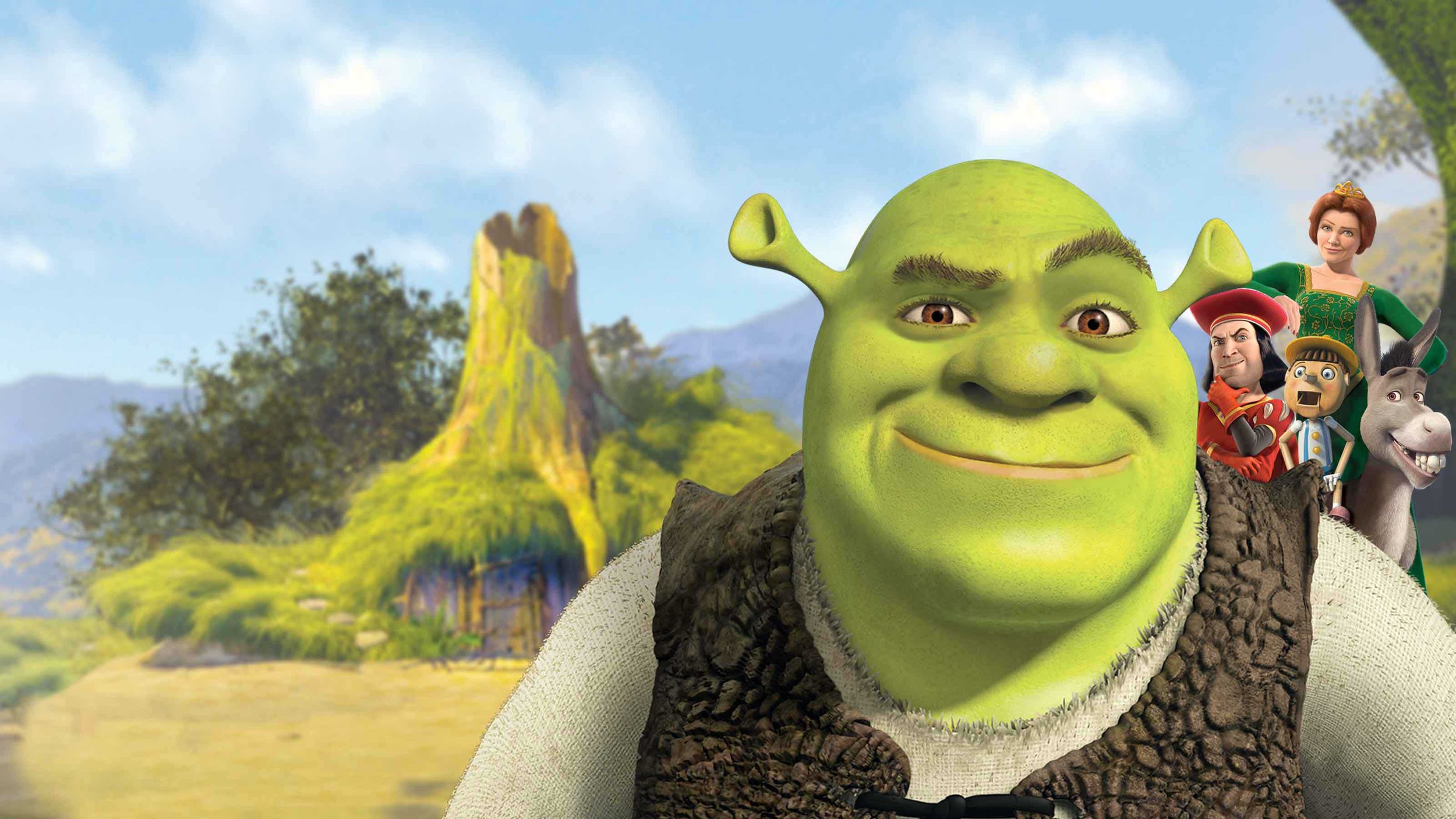
Image © courtesy of DreamWorks Pictures
Then came an opportunity that changed everything. Julia joined Steven Spielberg’s London-based animation studio Amblimation, where she met Sim. Soon after, the pair made the same life-altering move - heading out to LA in 1995.
“There were a few of us already out there to work on an animated version of Cats… and then one day Spielberg brought us all in and just said ‘We’re not going to make Cats, but you’re all going to go and work at DreamWorks’, which was just starting out.”
DreamWorks Animation was new, ambitious and slightly chaotic. Its campus, perched behind the Universal lot, felt like a playground for filmmakers. Julia remembers seeing Hollywood figures casually walking past, while Sim says: “There was one of the DeLoreans from Back to the Future in this car park of props, just out in the rain.”
It was surreal. It was exciting. And somewhere within that creative chaos, an ogre began to stir.
Sim’s path into the project was anything but straightforward. “I was an associate editor on The Prince of Egypt… but we got to LA and they sort of tried to find a place for me at DreamWorks.”
Then, one day, an opportunity appeared.
“A friend of ours said ‘We know you want to cut something. We’re going to set up this special project - would you like to be in on it?’. That turned out to be Shrek.”
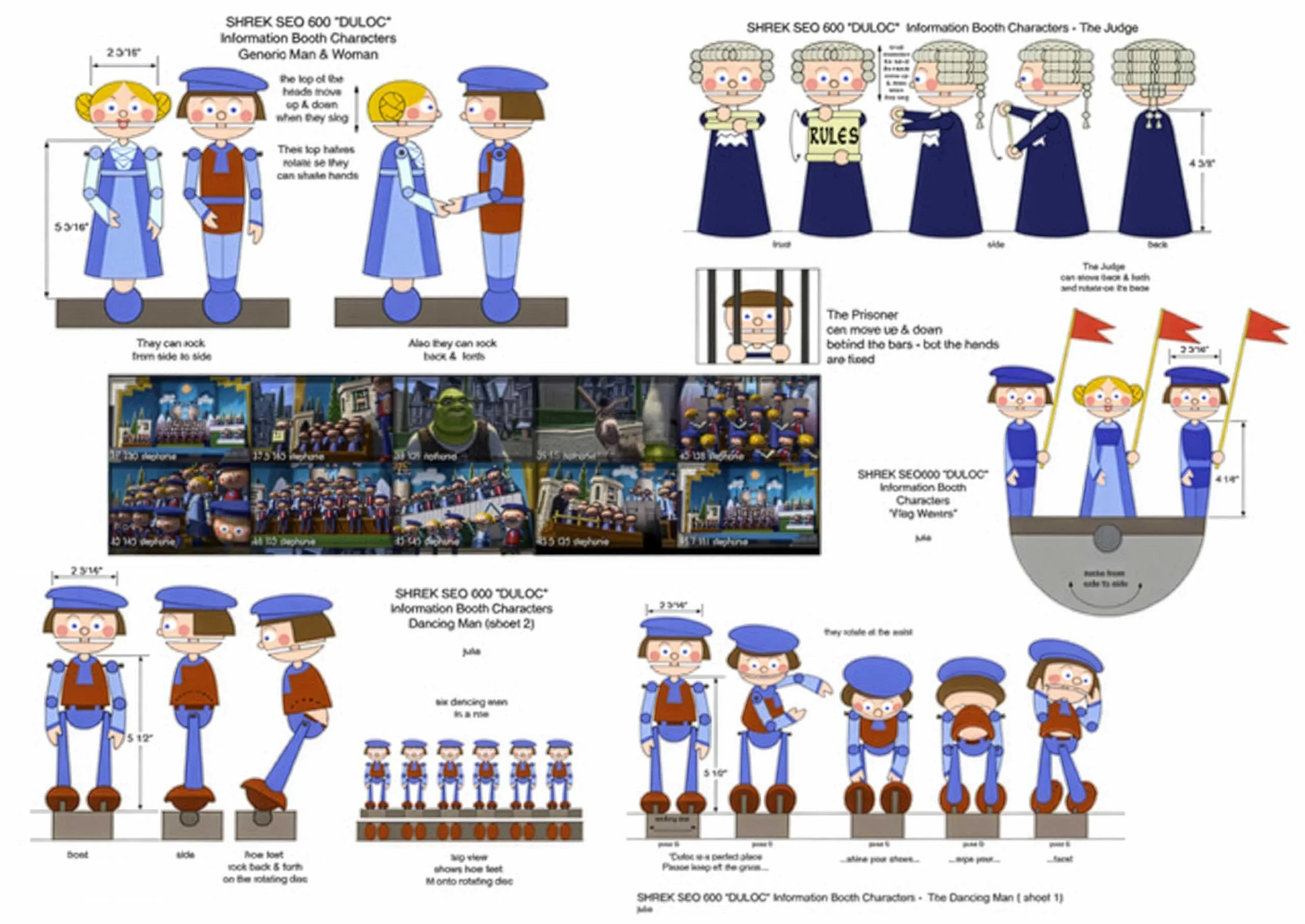
information booth characters / DESIGNED BY JULIA WOOLF
At the time, it wasn’t even fully part of the studio’s main slate. It was experimental. A side venture into computer-generated animation. “They wanted to dip their toe into CG,” Sim explains, noting the influence of renowned film producer Jeffrey Katzenberg, who had seen the potential of emerging technology.
But Shrek’s beginnings were littered with problems.
“Originally they were going to do motion capture,” Sim says. “We did this motion capture test… and it was pretty dreadful.”
Even more astonishingly, one of the early collaborators who didn’t make the cut was a then-unknown writer: J. J. Abrams. Then came another twist, one that almost ended everything.
The film had been built around comedian Chris Farley, who voiced the original Shrek. For a year, the team worked closely with him.
“He was so funny and he was so perfect for the part,” Sim recalls. “He had this huge personality… but then he’d be super-vulnerable.” Then, suddenly, tragedy struck.
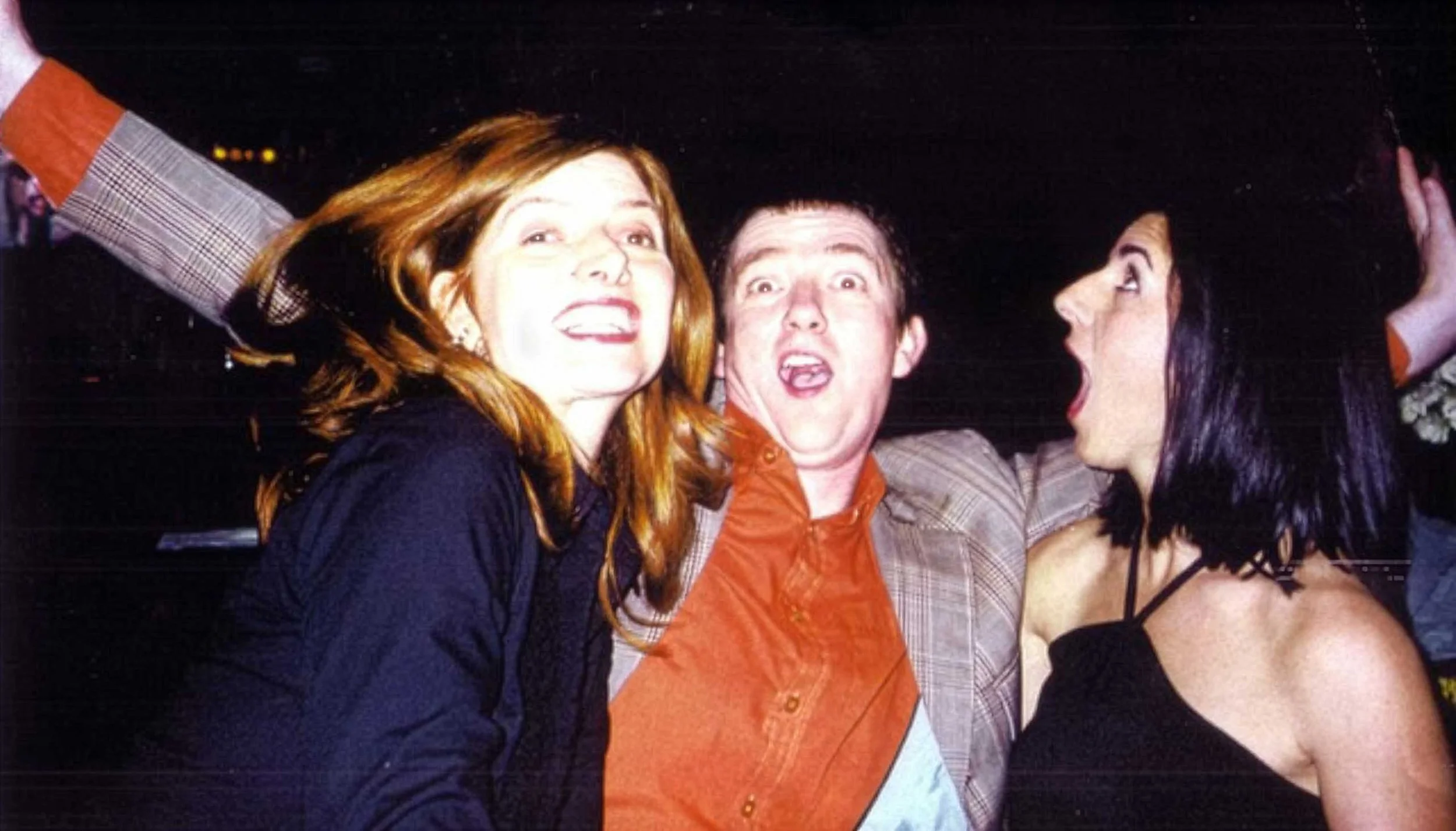
Juia and Sim celebrating at the Wrap-Up Party in San Francisco
“I remember being on the plane, coming home for Christmas in 1997. I started to talk to the guy next to me and he asked what I did, so I told him I was making this film with Chris Farley. He replied ‘Oh, I’m so sorry. He’s died.’ I thought ‘Oh, what the f*ck do I do?’ Well, there was nothing I could do because, you know, the doors were closed and the phones didn’t work. And off I went to London. And it was just miserable - Chris was such a lovely bloke. He was so funny.”
Farley’s death left the production adrift. “We were in this wilderness,” Sim says. For a while, Shrek seemed destined to disappear. But somehow, it didn’t. They regrouped. Recast. Rebuilt. Eventually, Mike Myers stepped in, reshaping the character entirely. At first, he used his natural Canadian voice until feedback from Spielberg changed everything.
“‘I like it,’” Sim recalls Spielberg saying, “‘but the voice is weird. Couldn’t he sound more like an Irish wrestler?’.”
What followed became iconic: the now-famous ‘Scottish’ accent that helped define Shrek.
Still, within the industry, belief in the project remained low.
“The whole vibe around Shrek was always that it was this side project,” Sim says. “People thought it wasn’t all that… a bit naff.”
The scepticism was blunt, even brutal.
“We used to bump into people and they would say ‘Oh, you’re still working on that piece of meat’.”
Another colleague was even harsher: “Sim, mate. I really hope this doesn’t damage your career.”
But for Sim, that doubt became fuel. “I loved that. I loved being part of this rebellious thing.”
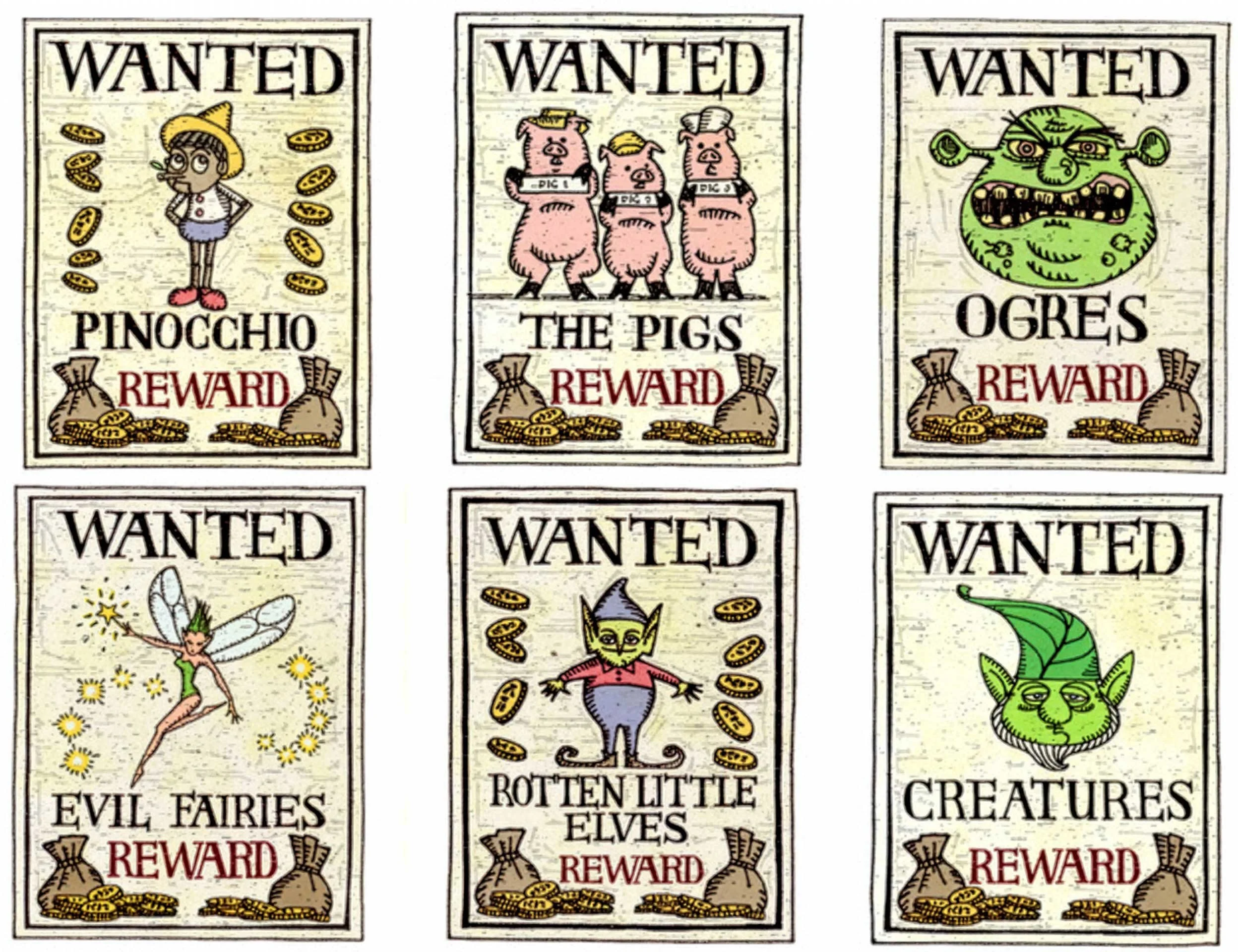
WANTED POSTERS / DESIGNED BY JULIA WOOLF
Julia, too, sensed something others didn’t. A quiet optimism sparked by a colleague’s insight.
“There weren’t many women in the layout department. In fact, there were only three of us in a crew of 30. And this woman who had previously worked at Disney said ‘I think Shrek is going to be good… because it reminds me of The Lion King’. And everybody thought The Lion King was going to be rubbish.”
That comparison lingered. Maybe, just maybe, this strange ogre story had something special.
Meanwhile, the work itself was deeply collaborative. Julia helped design parts of Shrek’s visual world - from environments to intricate details like stained-glass windows, ‘wanted’ posters at the ending and even the famous storybook opening.
“In the art department, you’re basically designing props and sets. You’re also doing colour keys for sequences,” she says. “For example, the church at the end, you would actually have to design the church and do the blueprint as like an architect, and you’d have a model-maker, and so you’d get a sequence that was all storyboarded.”
The Information Booth in Duloc is a classic scene in the film. “I designed all the little characters that sing,” says Julia. “I actually wanted to make sure that they would really work if they had been actual physical objects - I also added the butt cracks. And then, once you’ve done all your design work, they go into the modellers. And then they get sent off to have wood textures put on.”
Sim says: “It’s a massively collaborative thing and there’s so many expert people at each stage. You don’t build something all the way through to the end - you build your bit of it, yeah, and then you pass it on to the next person.”
Sim’s role as editor placed him at the heart of the storytelling process. In animation, there is no live-action set - everything is built piece by piece.
“The interaction that goes on on-set: ‘Should we try it that way? Have you thought about this?’ All those conversations arrive in editorial and that’s the place where you kind of re-steer the ship and, especially on Shrek, it was very, very driven by the editorial process.”
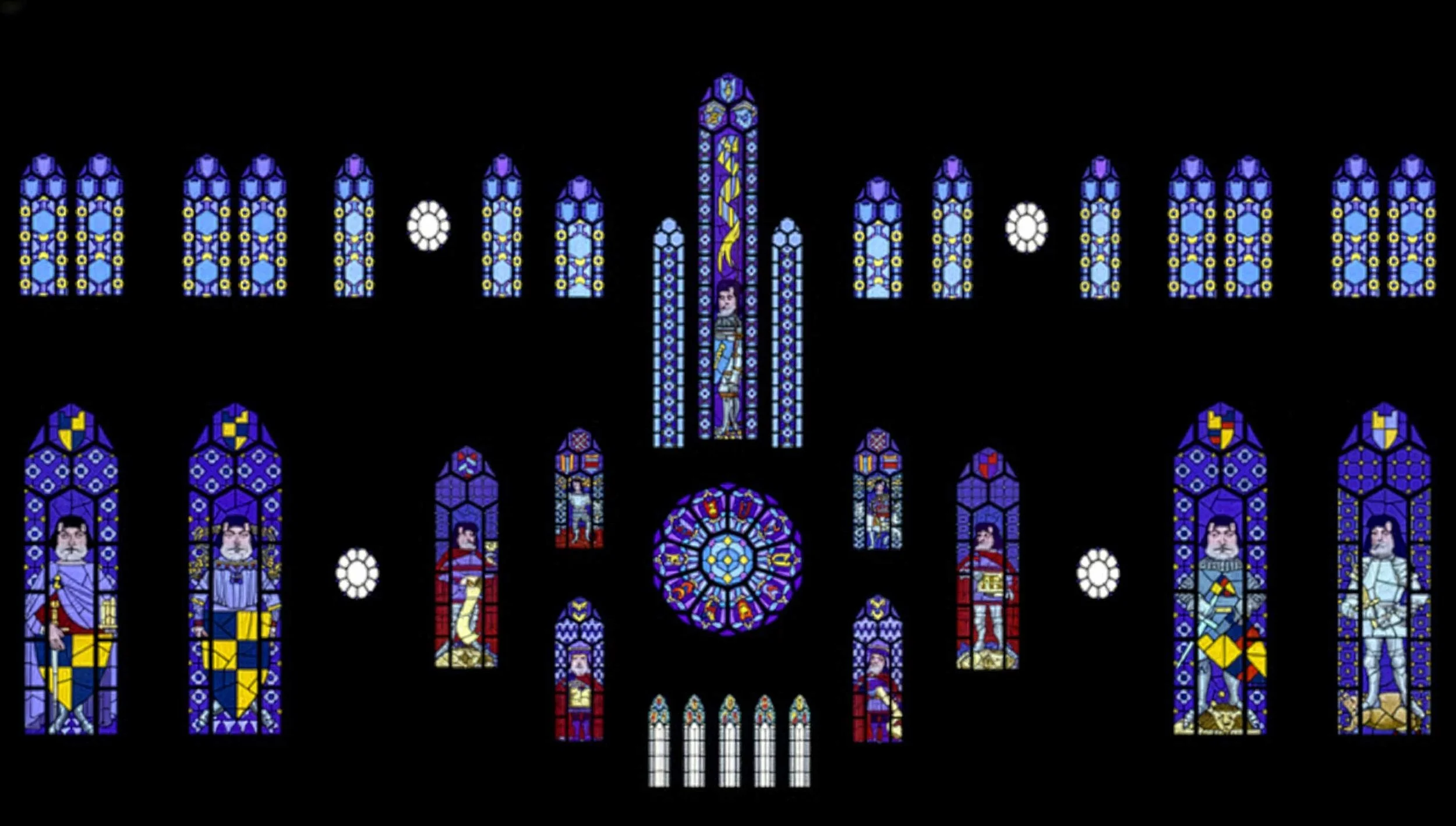
STAINED-GLASS WINDOWS / DESIGNED BY JULIA WOOLF
A NEW CHAPTER
Shrek’s humour, now legendary, was fragile in its development. Jokes born on Post-it notes had to survive countless revisions.
“It would be hilarious on the Post-it note,” Sim says, “and we would try to keep that funny going… even when there are 100 critical eyes on it.”
The project’s turning point came when production moved north, to Palo Alto, away from the studio’s centre of gravity.
“It was allowed to take shape and really find its way,” Julia says. “Storyboard artists were really creating something without too much interference.”
Freed from heavy oversight, the team leaned into something new - irreverent humour, pop music and a tone that broke sharply from traditional animated films.
“The idea of using popular music, or ‘needle drop’ as it’s called in the biz, was so alien,” Sim says. “They kind of just saw that it worked… and trusted us.”
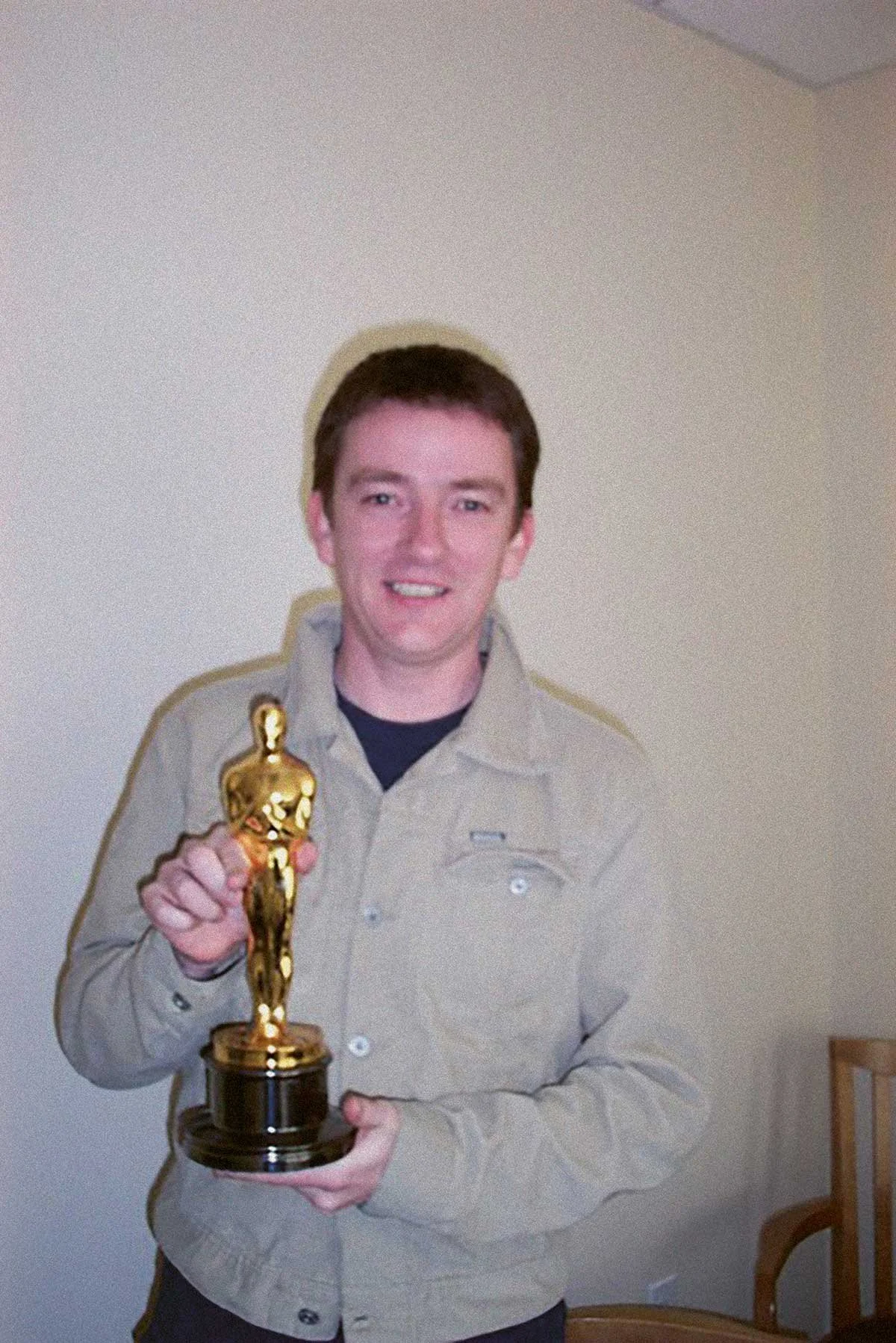
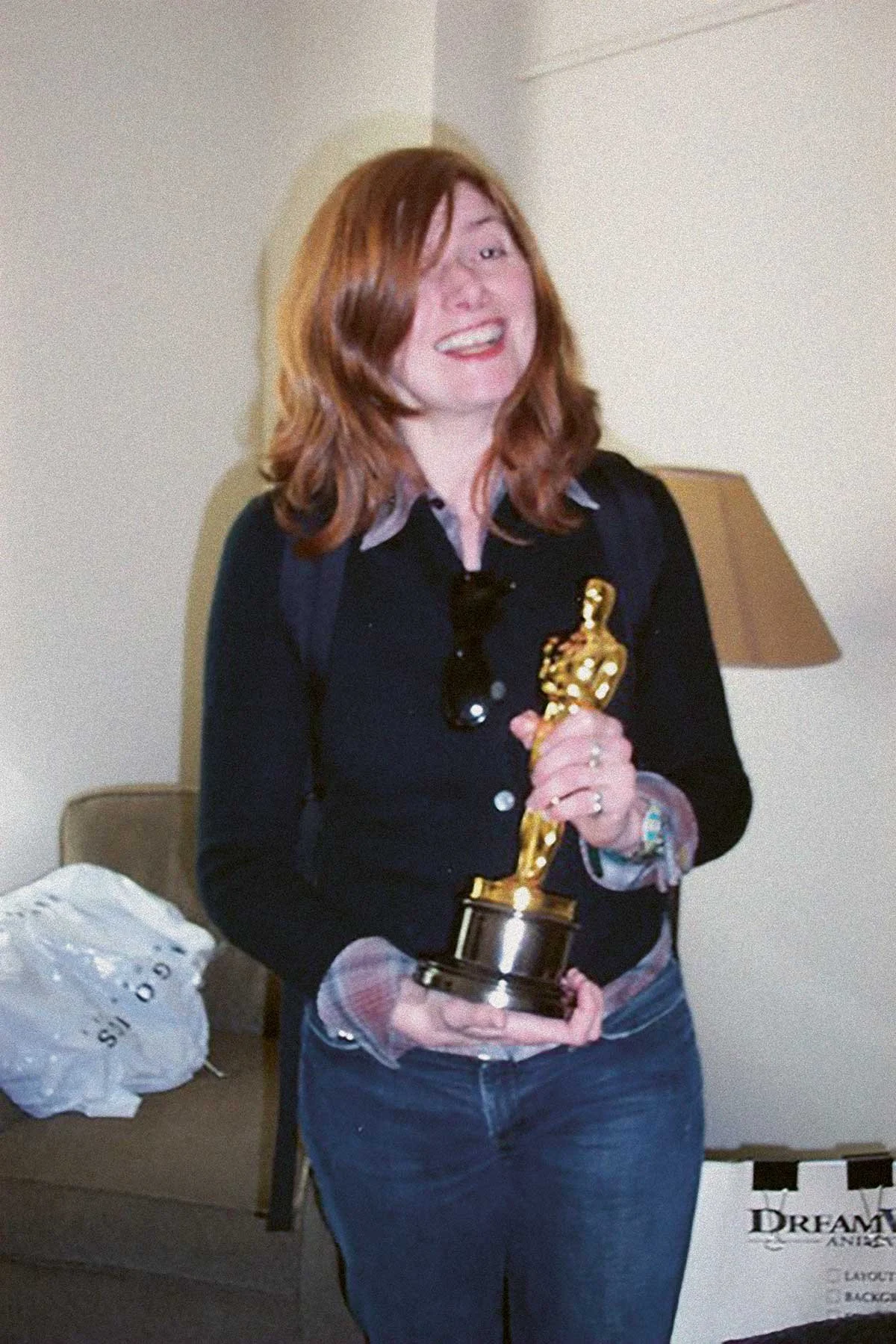
A camaraderie grew and alignment between director Andrew Adamson, creative producer Aron Warner and Sim was important.
“We were great friends. We got on really well. I still see them, you know, they’re both still around. They’re brilliant, funny people, yeah, we were quite a tight little group, you know.”
Years passed. Almost five in Sim’s case. A long, uncertain journey. And then came the moment. Six months before release, the team gathered in a nearby cinema for a rough screening.
“A lot of it was storyboard,” says Julia. “Certain sequences were complete and some were still in sort of layout stages. But it was so funny. Everybody thought ‘Oh, my god, this is going to be massive’. It was like a collective feeling.”
When the film was finally released in 2001, the reaction was immediate - and overwhelming.
Picking up a paper, the reviews were stellar and the couple checked into a cinema in San Francisco to watch it with a regular audience.
“We just sat there with everybody,” says Julia. “It was just such a buzz. I’ve never had a feeling like that on something that you’ve worked on.”
Shrek didn’t just succeed, it changed things.
“It gave DreamWorks identity,” Sim says. It also helped redefine animated storytelling, proving that films could appeal to both children and adults with layered, edgy humour.
“It set that thing… to have jokes that adults got and kids got… that was the sweet spot.”
It even made history, winning the first-ever Academy Award for Best Animated Feature.
And yet, like all good fairy tales, the story didn’t end in Hollywood. Eventually, Julia and Sim chose a different life.
“We had our daughter and it just made sense to be back here in Faversham,” Julia says. But the connection to Shrek never faded. Friends and collaborators still visit. Directors drop by. Stories are shared.
And as the 25th anniversary of Shrek approaches, the film’s legacy feels more remarkable than ever - not just because it succeeded but because it almost didn’t.
A film almost lost in tragedy and doubt. A rebellious, risky experiment that rewrote the rules.
Once upon a time, nobody believed in Shrek. They do now. The end.