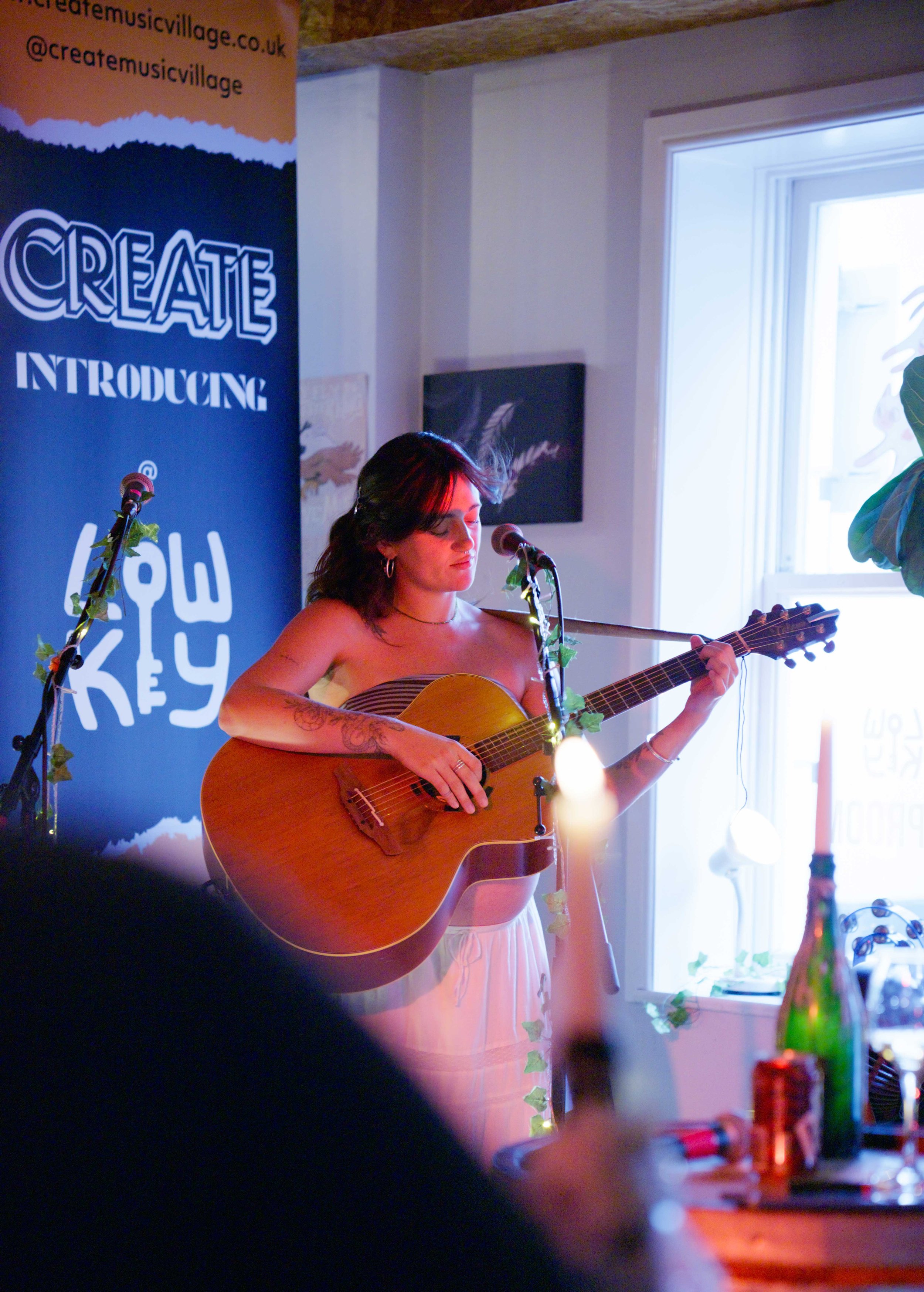
Jake St Ange is on fire. His engaging social media sees him spinning words and playing the piano at his dad’s café.


Almost eight years ago, in Issue #9 of ‘cene Magazine, we visited The Sea Cafe on The Green in beautiful Walmer. What we discovered wasn’t just a cafe producing wholesome food but a centre for the spoken word and a discussion about culture and integration.
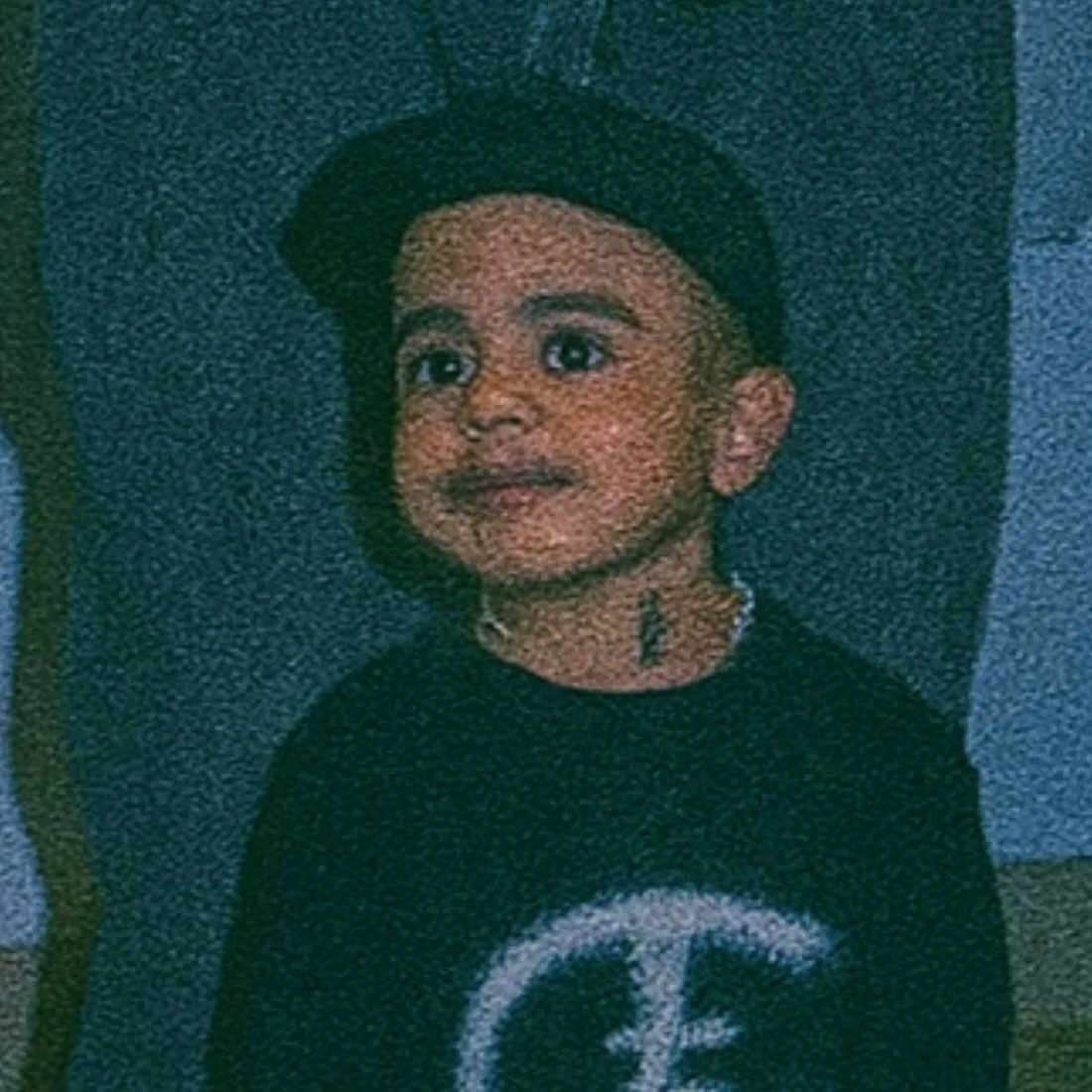
Owner Pete St Ange had created a place filled with togetherness, from open Soul On Sunday live-music jam sessions to The Stone Conversation - a series of beach pebbles painted with topics of conversation, often hard-hitting in nature. Honestly, it was both inspiring and memorable. What we didn’t know at the time was that Pete’s teenage son, probably working in the kitchen on the day, had been absorbing these lyrical and cultural influences. Jake St Ange (@jakesaintange) is on fire. His engaging social media sees him spinning words and playing the piano at his dad’s café, regularly hitting views in the hundreds of thousands. His music is picking up traction, too, with 100k monthly listeners and the latest track ‘?’ already zooming to more than a million streams. Just a few days after his debut live show at The Forge in The Lower Third Bar in London, we caught up with Jake to find out a bit more.
C: Hey Jake, have you recovered from the gig yet?
JSA: Hi! Yeah, it was amazing. Obviously, Spotify and online is kind of growing, so doing it live was kind of the final part - getting that kicked off was such a relief. And it was really fun as well!
C: We featured your track The Kitchen in our playlist in the last edition, and then on Saturday morning I got this voice note from Casey Dale at BBC Introducing in Kent saying he had just seen one of the best debut shows he’d ever seen, and asking whether I had heard of Jake St Ange…
JSA: That’s so nice of him to say that. He’s been showing so much support. I met Casey through my friend Fuji Hideout, who’s a producer and an artist as well. He was featured on BBC Introducing Kent for their speed-dating segment on Valentine’s Day where they were pairing artists and, coincidentally, the first night that Fuji was on that, I was first played.
C: We originally knew your dad through the cafe and you were probably in the kitchen. So when I saw your surname pop up in music, there was surely no coincidence. What were the beginnings of you wanting to get into music?
JSA: It was definitely the lyric-writing side of it for me, first and foremost. I’ve been writing lyrics since I was about seven years old and it’s just something that I always just naturally did. It was like walking, it just came so naturally to me. It was just something that I always loved. And I think a lot of the reason for that was because my dad is massively into words and he was writing some poetry and he had the word stones… so there’s always been this family fascination with words and language and being articulate. And my dad’s such a good orator - I think that inspired me as well to try to use my words, too.
C: I saw someone call you a rapper, which I guess is true, but I think that’s quite finite in a way…
JSA: Yeah, definitely. I’ve been writing for so long and now playing instruments and producing - and even before I was doing drum & bass, dance music and singing and I’ve written folk songs and country songs and pop songs. So for me, it’s just this is kind of what happened to get traction on social media. But I’m just saying I’m an overall musician and expressing myself how I want to.
C: Spotify tries to pigeonhole you into a type of music - what do you tend to be put under?
JSA: I mean, I will definitely lean closer to UK rap, just because it’s kind of the closest to what I’m releasing at the moment, but I still find it difficult to place myself. Obviously I’m rapping, but in the song ‘?’, for instance, it’s very singing-heavy as well.
C: On your socials, with the pieces on piano, the way you articulate and create a story or a scenario within your words is amazing. So what was the breakout moment and what got popular first, the socials or the music?
JSA: If we go even a little further back, for about a year, I’d completely stopped doing the artist thing and I was just writing for other people. And I was trying my best to just get in as many sessions as possible and work towards a publishing deal. I managed to get a few decent cuts as a writer. And then my friend efan told me to do social-media bits because it could help me get a publishing deal if something went a little bit viral. I was also working at the cafe and then I thought ‘OK, I’ll just put the camera down and do a song about my dad’. And I think that must have done maybe 12k views - higher than usual - and I thought ‘OK, I’ve got something here’. So I started doing it and a few days later something did 30k or something, so I kept doing it for another two weeks, writing a little song every day and then maybe something did 100k and then 500k and then obviously ‘?’ started to do the millions.
At the same time, I was obviously posting everything on Instagram and TikTok, which was growing at the same rate, which taught me that it’s about the content itself and the song and it’s not just luck.
C: So that then led into releasing the songs?
JSA: Spotify, it took me a little bit to crack and convert people over from socials. I was trying different ways of doing it when something would go viral. I think the first time, I was lip-syncing to the audio, which did OK, but it didn’t convert as many people as I would have wanted. And then maybe the second time I did something higher quality and that would maybe convert people more to the record. So it was kind of a process of trial and error.
C: Fast-forwarding a little bit, let’s talk about your first live gig!
JSA: I did a lot of gigs acoustically, growing up in Kent and stuff, but it was the first one with the full band, with tickets, like it was my headline show.
C: Have you always been musical and able to play instruments?
JSA: I picked up the piano in about a year at school - I was just doing it as a laugh, learning songs, and my friends liked stuff. And music just became a part of my identity, really. I think that’s why I stuck with it so much. In your teenage years, when you’re really kind of figuring out who you would have been, it felt like if you took the music away from me I kind of wouldn’t really exist.
C: What sort of music were you into growing up?
JSA: I’ve got lots of random influences, especially growing up mixed-race - my mum would be playing Iris by the Goo Goo Dolls and my dad would be playing reggae.
Even from that family level, both my parents being from different backgrounds, I think gave me a unique experience with the music I grew up listening to and the variation of it.
I personally like all-round great creators, people like Labrinth. Jon Bellion is a big one for me. Storytellers and lyricists like George the poet, yeah. So it’s kind of a strange mix of influences.
C: What’s the state of play at the moment? Are you still working in the cafe? Are you just doing music full-time?
JSA: I’ve got some options, which is really good. I feel really blessed. I think regardless of what happens with the music, I’ll keep working at the cafe, even if it wasn’t for the money necessarily. I think it keeps me grounded. It’s good for my routine and my soul area - and it’s family, isn’t it!
C: We originally reviewed your song The Kitchen, which had that bit from your dad at the end, offering advice - it built a nice view of where you were and what you were thinking about at the time.
JSA: Yeah, it’s quite a mad story - you guys speaking to my dad and now speaking to me seven years later about the same kind of thing, with words and stuff.
C: We understand you may be on the verge of a music-deal announcement?
JSA: It’s possible. I already feel blessed to have the opportunities that I’ve got. I probably can’t go into detail because stuff is still going on.
C: OK. So what’s the plan for the rest of the year?
JSA: I think the plan is really and truly to keep on finding the words, taking care of myself and my energy, to stay grounded. I’m trying not to over-complicate it too much, work hard and release a lot.
C: With the numbers that you’re getting on Spotify and social media, are you having a lot of people sliding into your DMS for collaborations?
JSA: Yeah, I have had a lot of that, which is really nice, to be fair. It’s pretty cool to suddenly have people wanting to welcome you. I could have done with it when I was really, really trying to be a writer and stuff, and that was the main goal - it would have been nicer. But at the same time, it’s still a massive blessing to have people interested in collaborations.
C: And you said you’re working with Fuji Hideout, right?
Yeah, so me and Fuji met at college in Canterbury, right? And there’s efan, he’s a DJ.
There’s a guy called Blissfool as well. He’s doing really well at the moment in Kent, too. We started this thing called 6AM in college where we were all studying music. It’s like a creative collective and we’ve been creating music together for years and years. So by the time that things started to go viral for me on social media, we’d already kind of built the whole infrastructure, so I could easily go ‘OK, let’s get this song straight in the studio with Fuji or with efan, and we can turn it around in like a day and get it out’. Fuji is an absolute musical genius as well, to the point that he’s got perfect pitch and stuff. He’ll hear a bus engine and be like ‘Yeah, that’s a D-sharp’.
And efan is a massive talent as well. Incredible mix engineer. I definitely intend to keep working with these guys all the way.