IN CONVERSATION WITH… Voka Gentle as they release new album Domestic Bliss
From revving motorbikes to spoken word to banging metal ladders, Domestic Bliss is chaos funnelled, noises refined and words chiselled into an intriguing record

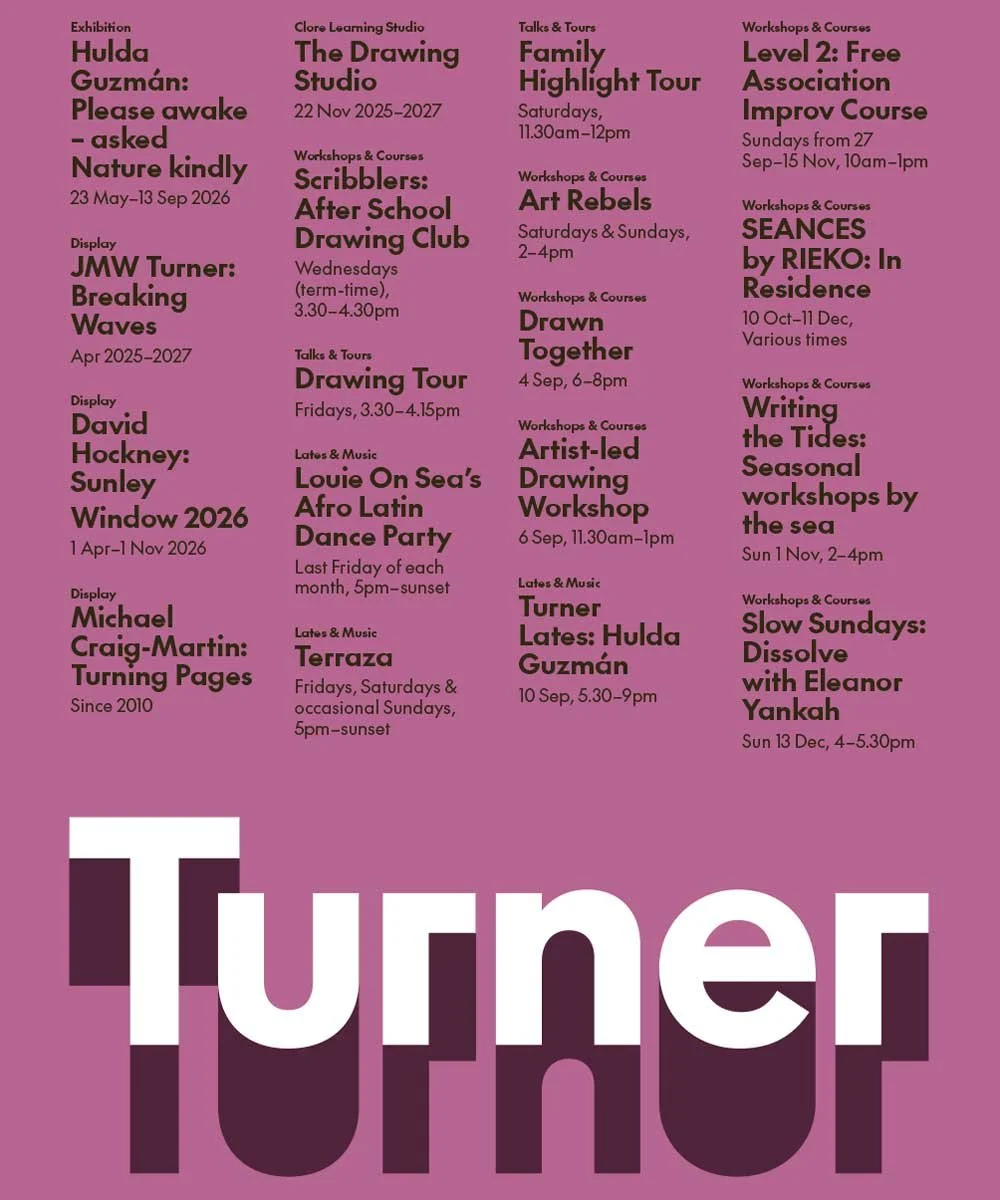
Voka Gentle are something different. Their foundations are perhaps more akin to folk music than anything else, with violin, banjos, guitars and electronics, but their latest release Domestic Bliss reveals a creative edge that can’t really be summed up in a genre as such. It just has to be listened to, imbibed, considered and reconsidered.
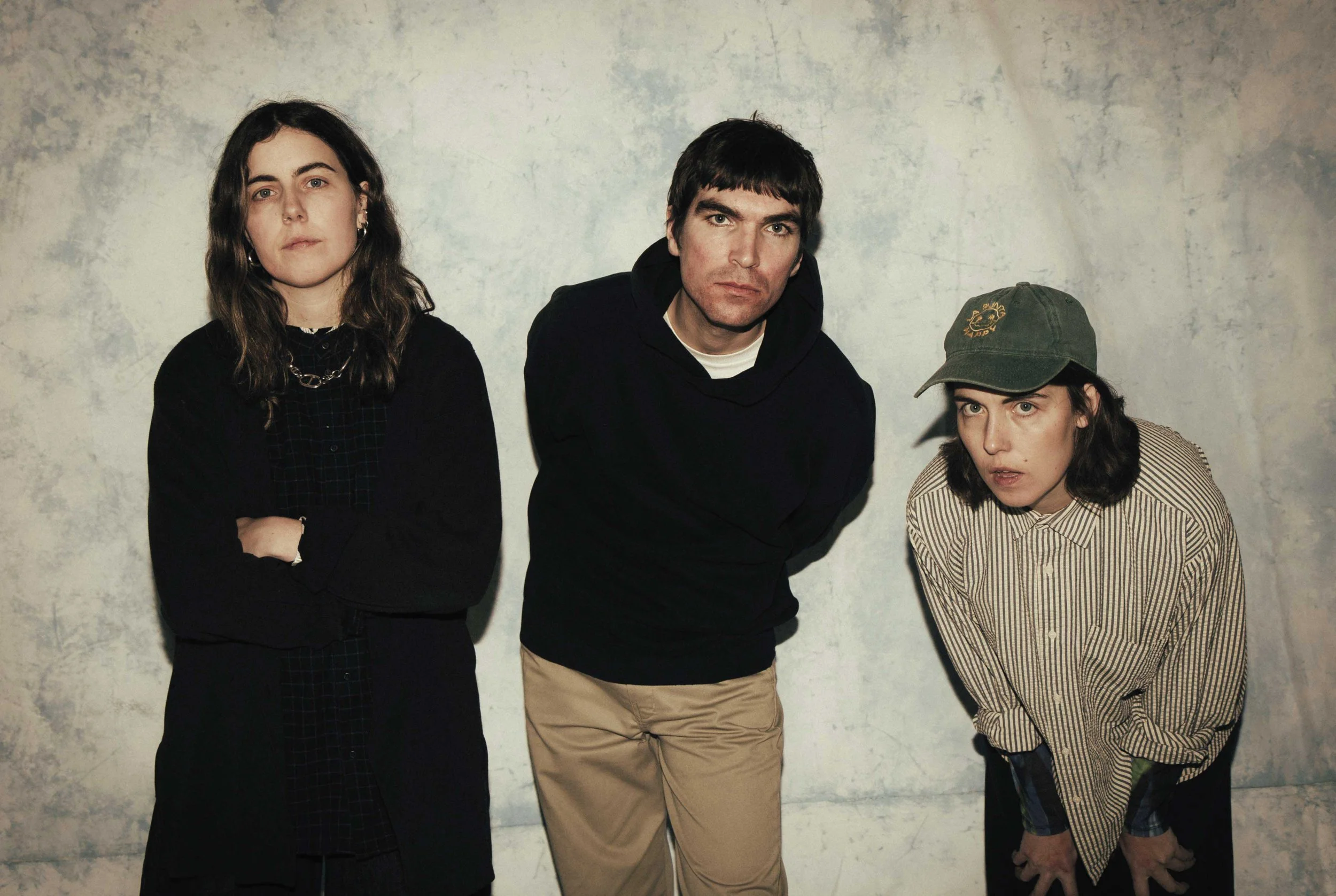
Made up of identical twins Ellie and Imogen Mason from Knockholt, near Sevenoaks, and William J Stokes - who is married to Imogen - Voka Gentle are the epitome of the whole being greater than the sum of its parts.
Their individual musical activity and skills (which are breathtakingly wide) all feed directly into their shared project. Ellie - as well as being a session guitarist for Paolo Nutini, Badly Drawn Boy and others - is the in-house engineer at Mute Records, with access to synths that once belonged to Kraftwerk and Depeche Mode. William is a producer specialising in modular synthesis sound design, working on a PhD in composing at extreme volumes. Imogen is pursuing an MA in sound art and last year released her debut solo album as sm^sher.
From revving motorbikes to spoken word to banging metal ladders, Domestic Bliss is chaos funnelled, noises refined and words chiselled into an intriguing record that does… more. We caught up with the band to unravel things a little.
‘Cene : You guys are experimental in what you do, so when you're in the recording studio, where do you begin? There’s that famous story about The Chain by Fleetwood Mac, where they had two songs and didn't know what to do with either. So, they smashed it together and it worked. So, how does the creative process begin for you?
Ellie: We have done that in the past. We have just smashed two songs together.
Imogen: We're working on one where that's actually a thing. Just having two pieces that we really like and then being like, ‘hmm, maybe this will work’.
William: It's mainly about not being too precious, about trying to predict where things might end up. Even if the music doesn't sound experimental, I suppose we are experimental, just because often we don't know how things will turn out, which is an experiment, right?
Imogen: Yeah, it's more of a compositional approach.
William: I guess, putting things together that you might not ordinarily expect to go together - whether that's two sections of something, or two instruments, or two lyrics, or singers even, that's just our MO and how we've always operated.
Imogen: We have three people who are all songwriters, producers and arrangers. We all have different aesthetics, and we're all drawn to different things. We're going to naturally collide, and we welcome those collaborative moments where someone has an idea, and it's not where you thought the song would go, but it's because someone else is bringing their impulse and their instincts. So we're not really afraid to layer up things that might not necessarily be in mind initially, when you first conceived of a song. But we really enjoy that… you want those surprise moments.
William: That's the kick, that’s the drug, especially in the studio, that moment where there was a genuine gamble but it really works for some reason that you can't quite put your finger on. That's the very nub of the fun.
‘cene: So you do really have to sort of check your egos at the door and align?
Ellie: Yeah, we all have to like it because, I mean, that's why we're in a band and not a solo project. I think we've done it enough now to know that sometimes you need to sit with something to figure out why the other two are resonating with it, and you're not. We don't like dismissing ideas straight away. We like living with them, and sometimes it's a case of just tweaking it a tiny bit. But we just throw everything in and then nothing's off limits. At the end of the day it's all of our songs, it's just as important to the three of us. The point of the band is to collaborate and for all of us to really love what we're making. So no one has the final say. But sometimes, I think being a three, you can get an immediate decision, two against one is very good, very quick!
William: The most brutal type of democracy.
Ellie: We’d actually have a nightmare if we were four - stalemate!
‘Cene: You’ve just released your new album Domestic Bliss…
Imogen: Yeah, it came out on vinyl, and also special Dinked Edition, and that has a really nice bonus CD of remixes and lots of other nice bits and bobs to it. Then we have a headline tour.
‘Cene: How does it work with converting especially new stuff into a live show format?
Ellie: We had the live show in mind when we made this album. Can you believe it? For some songs more than others. And actually some of the songs changed their shape once we started playing them live, we actually added to the recordings, or edited the recordings based on the live show, which we've never done before. So some of the songs were straightforward, but we really have tried to pare back the elements. Density is a really big part of our sound, and I don't think we're going to ever really step away from it, but at the same time, we wanted to get more focus. So this is the most focused album that we made, and so that translates really well into life.
‘cene : What does the set look like?
Ellie: We play live with the drummer that's on the record, Ollie Middleton. We see live as a faithful representation of the record, but also totally different in a way.
It’s more about this immediate type of communication. It's more of a visceral experience. Our shows are heavy, they're powerful, you know, we want them to be really striking. Whereas the album is something that you can chew over. You can go back to it again and again.
Imogen: Our songs do have quite a lot of sound design elements and collage elements, and that can be a drawn out process to try and get an arrangement that we're happy with. I mean, some of this stuff is quite technical, because we're playing everything. All of the samples we’re triggering. We don't play to like a track, so it does take time just to figure out, like, what are the elements that we want to and then also leave room for improvisation if we want to.
‘Cene: You use a number of field recordings on the album…how does that work live?
William: Yeah, field recordings are a way of transporting people to a place which is kind of obvious, but you can conjure up a very concrete image of something in particular, but a sensation as well. There's like a bit on Domestic Bliss at the end of the track ‘The Creature’, which is a recording of a motorbike convention of all the bikers starting their engines at the same time. And it was this absolute hum. It was this unbelievable sound. You're not going to recreate that on a stage, but the sensation of it, of something being big and overwhelming and growly and quite animalistic, we can do in another way.
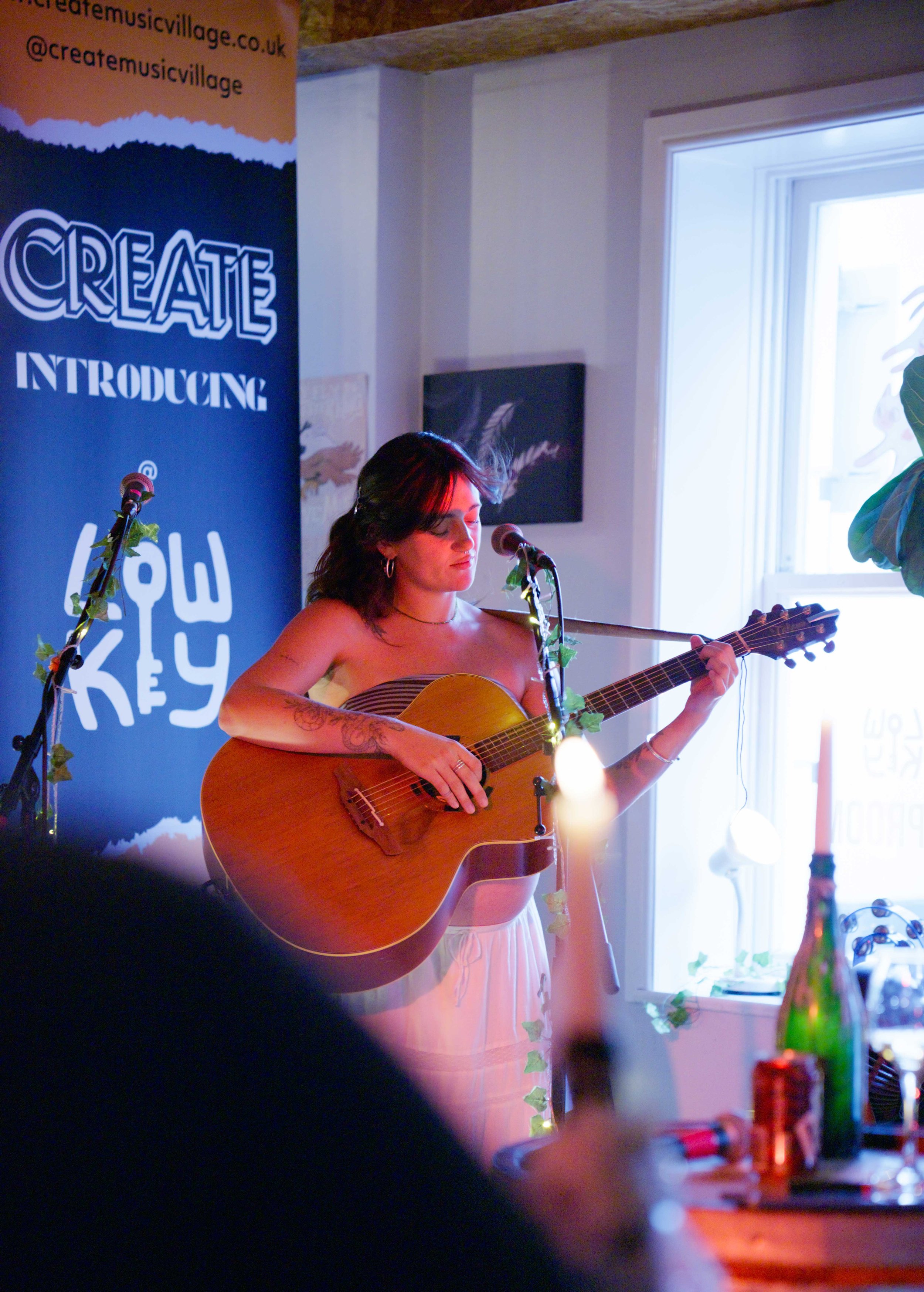
Imogen: We did a run of shows at Christmas, where we are recording bits of our songs as we're playing them, and then we're looping them, and then we're playing that back into the room. Or, recording bits of the crowd.. and then we might manipulate it. We do a lot of playing around live. It's good fun.
‘Cene: Your music seems very instinctual - is it annoying when people like me look for a narrative about every song?
Imogen: No, not at all. We are very instinctual. But also our lyrical content is really considered. So, maybe it's just both.
William: Whenever we talk about, like, our process, there's always a moment where you learn something about yourself. You do realize that we are just having, like, a group therapy session right here? We're unpacking, ‘who am I really? What the hell are we really trying to do here?’ it’s great. But, (seriously) it is a recurring thing. We get asked a lot about the process and where ideas start, and that feels like people are interested… and we're really appreciative of that, to be honest.
‘Cene: Is there a moment that you consider your favorite in the album?
Ellie: So the track called ‘Kinema’, it kind of starts very, very intimately with just bass and vocals, and then it expands out into this kind of frenzied, overwhelming, piece with these synths coming in. Will had basically recreated these metallic sounds from Wagner's Ring Cycle on his modular system. Relentless kind of pulses and jangles. And we basically decided to get loads of metal objects into this big room that we were recording in at City University in London and then just smash them together in this frenzy. And so we had a big metal ladder, and we had some cymbals, and we had just anything that you could hit, basically that sounded really metallic.
We got the assistants and everyone to come and join in.
‘Cene: Amazing, so finally before you go, we have to ask you about Kent. You grew up in Sevenoaks, right?
Ellie: Yeah, so me and Imogen, lived our whole lives up until we're about 27 in Knockholt. We went to Tonbridge Grammar School.
William: There's a lot of Kent love in this band. The Tunbridge Wells Forum is never far from, from our hearts.
Ellie: Imogen and I probably wouldn't be in music if it wasn't for being able to play at The Forum or The Grey Lady. That was the only and main opportunity we had to do bands, and the reason why we're still in bands now.