Crossing the Field: Author Rebecca Gransden releases novel on post-apocalyptic Isle of Sheppey
Columnist Zahra Barri talks to Isle of Sheppey author Rebecca Gransden about pilgrimage

“...it is a place of contradiction - the liminal land between earth and industrialisation, a common theme in her writing.”
Isle of Sheppey writer Rebecca Gransden’s new novel Figures Crossing the Field Towards the Group is mesmerising. Set during an unspecified apocalyptic event, her young protagonist sets out on a journey, encountering a wave of eccentric characters left behind from evacuation.
Just like the Isle of Sheppey itself, her writing has a standout individuality to it. Where the mainland is mainstream, Gransden’s writing has iconic islander tones - going against the grain of conventionality in favour of honing a unique style, it sees her main character merging into the marshes, blending her narrator with nature. She shows a world where, instead of fighting nature, we surrender to its will and its way.
This is something we don’t do a lot in our culture - the release of ourselves to the apocalyptic elements of the earth. The protagonist’s path is the one of least resistance and, by her falling into nature’s arms, Gransden doesn’t shy away from this surrender, offering both salvation and self-sabotage, too.
Gransden’s novel feels deeply transient to the meaning that in the end we are all one with nature, so why not succumb to its roots when we are alive, too?
She’s an Isle of Sheppey lass through and through. She says it is a place of contradiction - the liminal land between earth and industrialisation, a common theme in her writing. Talking to Gransden, one gets the feeling that there’s always something about the island that runs through her work, not just her latest publication. An enthusiast of indie and small presses, Rebecca is also features editor at X-R-A-Y Literary Magazine based in the States and at the forefront for coverage of the most exciting writers the underground literary scene has to offer.
I chat to her about not only the splendor of her latest work but the other books that form her ‘pilgrimage works’ continuum, as well as her secret underground club of literary Kent writers breaking the commercial constraints and how she thinks commercial success can be the worst thing to happen to a writer.
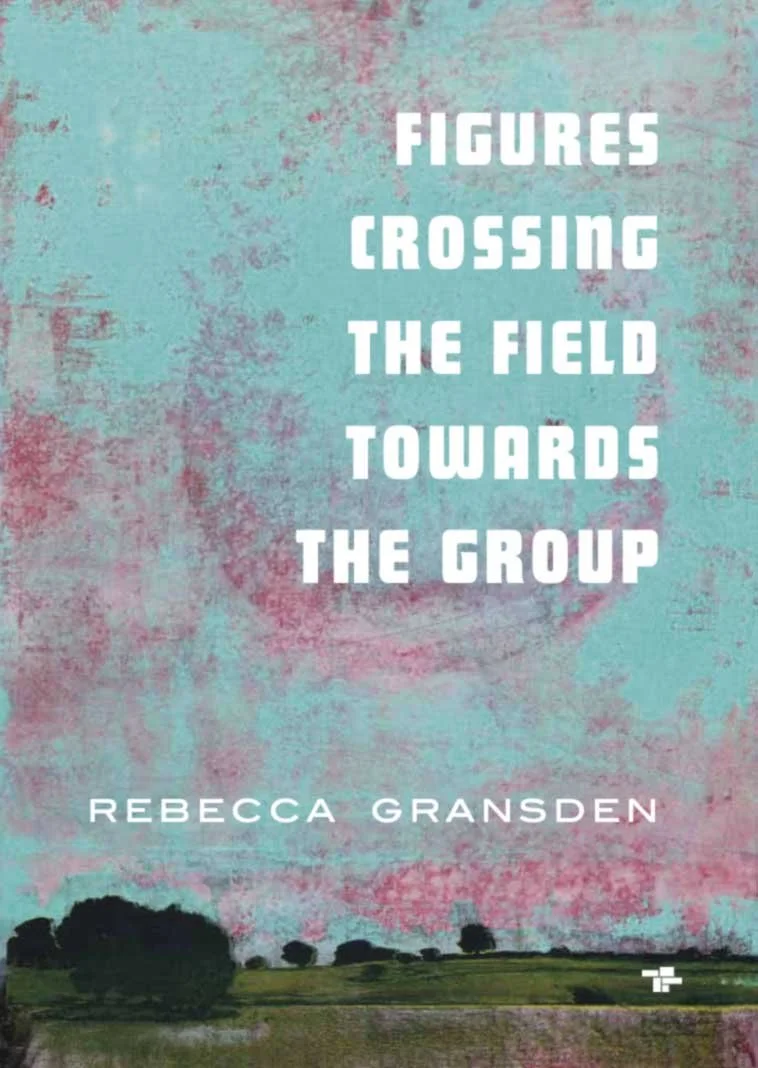
Rebecca, firstly congratulations on Figures Crossing the Field Towards the Group. Can you tell us what inspired it?
Thank you! On finishing the writing of it, I’d closed a chapter that marked near a decade. I’d planned to write it for at least a couple of years but felt unready. In that time, it remained in the back of my mind and I gathered a sizeable collection of single-syllable words. When I finally got around to the actual writing, it seemed to arrive fully formed. I hardly recall writing it at all, apart from a generalised sense of deliberateness. It’s barely edited and the version you read that is published at Tangerine Press is essentially as it arrived. This isn’t the same for every project of mine. Each one has arrived differently, demanding its own approach.
It is a final piece of prose as part of your ‘pilgrimage works’. Can you explain how they are all connected and what made you write in this vein of sequels?
Figures Crossing the Field Towards the Group is a companion piece to another novella of mine titled Sea of Glass, written a few years previously. While they are standalone works, I do regard them as functioning as part of a continuum, a phase that began with yet another book, Anemogram. A common thread to the pilgrimage works is that of meandering. When I consider the great journeying works and the pilgrimage tales of the major religions, for all their fancifulness, their allegorical natures, there exists central to them the common factor of a single human being putting one foot in front of the other. A person in a cell can take as many steps in a lifetime as someone who walks across continents. In their own ways, both of these figures travel.
How has the Isle of Sheppey inspired your work?
Sheppey is in my bones. The island’s geographical position means it’s a place of contradiction. It is at once apart from the mainland, a landing place because of the docks, and situated in an estuary. Nature rubs up against industrial landscapes, with marshlands overlooked by factory chimneys. While I spent my own formative long summers here, the island is a place associated with childhood for many more due to it being a seaside destination. This sense of off-season emptying still permeates the place. Like all islands, its history is unorthodox. It is defined by tucked-away areas and lanes that seemingly lead nowhere but somehow end up where they began.
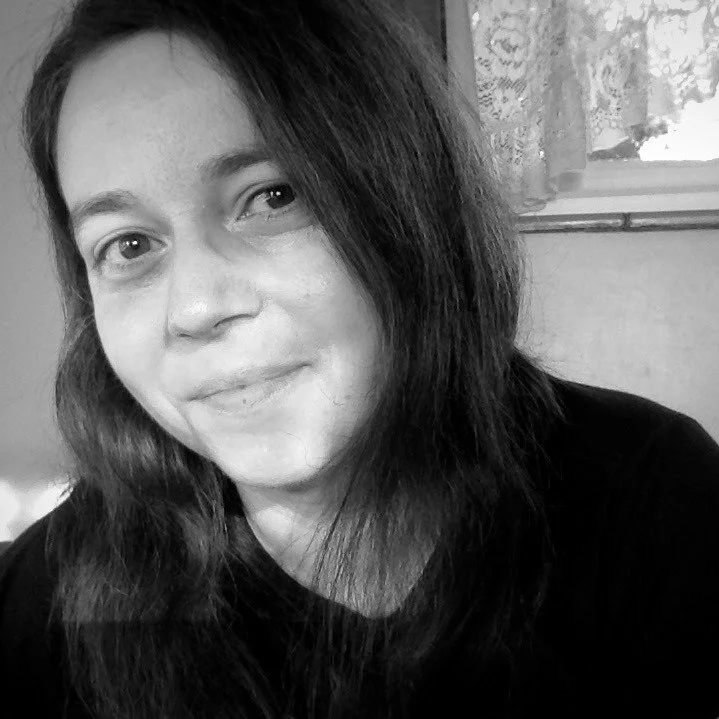
Author Rebecca Gransden
Tell us about your work at the international/American X-R-A-Y Literary Magazine - it sounds like an indie New Yorker or the London Review of Books!
One of my first publications was at X-R-A-Y and for a reason still unknown to me I was subsequently invited to take part. The founding editors Jennifer Greidus and Chris Dankland put a significant amount of trust in me and my role there, which I appreciate. X-R-A-Y is volunteer-led, so truly driven by passion, and a home for off-kilter, unconventional work that could otherwise be overlooked. Publications that possess their own character and vision, such as X-R-A-Y, are essential in a literary landscape that is becoming increasingly homogenised and boring. I’m excited to be part of it.
So many writers don’t fall into the popular fiction shelves who are indie/underground and incredible - this happens in all types of artistic scenes and often they are the crème de la crème of the lot, the hidden gems. Why do you think commercial success does not necessarily reflect the greatest art?
I try not to expend too much energy on why that is and concentrate on bringing focus to writing I find exciting. Commercial success can be the worst thing to occur to a writer, so I’m not even sure it’s something to lament.
You’re in the process of publishing writers who have fallen away from public consciousness - can you tell us more?
When it comes to indie/underground writers, I do my best to cover them at X-R-A-Y, although I wish I had the time to highlight more. With my republishing efforts I delve back into the past. There is an abundance of neglected writers that I feel deserve to be more known and read by those who might appreciate them. I’m attracted to short stories and have compiled several collections of work from obscure authors. In the past few years, I’ve enjoyed Hubert Crackanthorpe’s travel vignettes and Florence Carpenter Dieudonné’s pioneering science fiction.
What is your favourite literary thing to do in Kent?
A visit to the legendary Baggins Book Bazaar in Rochester. A rewarding way to lose track of time and I always come away with something unexpected.
Finally, what’s next for you?
This year is one of collaborations for me. A collaborative project titled The Undead Shepherdess and Further Cavities was released in January, and I have several more lined up that I’m excited about.
Figures Crossing the Field Towards the Group is available from Tangerine Press at £12
www.thetangerinepress.com/FICTION/RG-FCTFTTG

Zahra Barri’s Daughters of the Nile is available from Wilton Square books at £9.99
https://wiltonsquarebooks.com/products/daughters-of-the-nile