How Thanet artist Lily Mixe is giving the ocean a voice on the streets and in the studio

At the edge of Margate’s tide, where chalk cliffs rise from the sea, artist Lily Mixe (@lilymixe) drags a bucket across the beach. Inside, crushed chalk - ancient microfossils compacted into soft powder - is ready to be splashed across a seawall. Here she conjures squid, whales and sea angels in delicate white lines, momentary apparitions that tide and time will soon erase.
This is where Mixe feels most at home - somewhere between art and earth, between imagination and activism.
Born in the Parisian suburbs and raised on the fringe of Versailles, Lily Mixe, aka Lily Prigent, has spent the last decade crafting an artistic language that merges her fascination with marine biology with her passion for street art. Known for intricate, alien-like renderings of sea creatures, she brings deep-sea biodiversity out of the abyss and onto the urban landscape, into galleries and even across Margate’s beaches in ephemeral chalk murals. Her work is as much about preservation as it is presentation.
Her journey to ocean advocacy began far from the shoreline in the French capital, as a young artist detouring into the corporate world. “I did a graphic design degree,” she says, “but it wasn’t what I wanted.” Pursuing a “proper job”, she entered advertising, securing an enviable internship at one of Paris’s top firms. “I met amazing directors, photographers... but it wasn’t creative enough. I just wanted to do my art.”
Even then, Mixe found herself sneaking watercolours into spare moments - a habit colleagues mocked. “‘It’s not primary school,’ they’d say. That’s when I knew I needed to start again from zero.”
London offered that reset. A six-month plan turned into 11 years. She landed in the thick of Brick Lane’s vibrant street-art scene in 2012, just as the area was buzzing with international artists. “I met people doing giant murals, and something clicked. There was space, not just on the walls but in the culture. It was open. I could be myself.”
“It was like discovering another planet - but on our own Earth.”
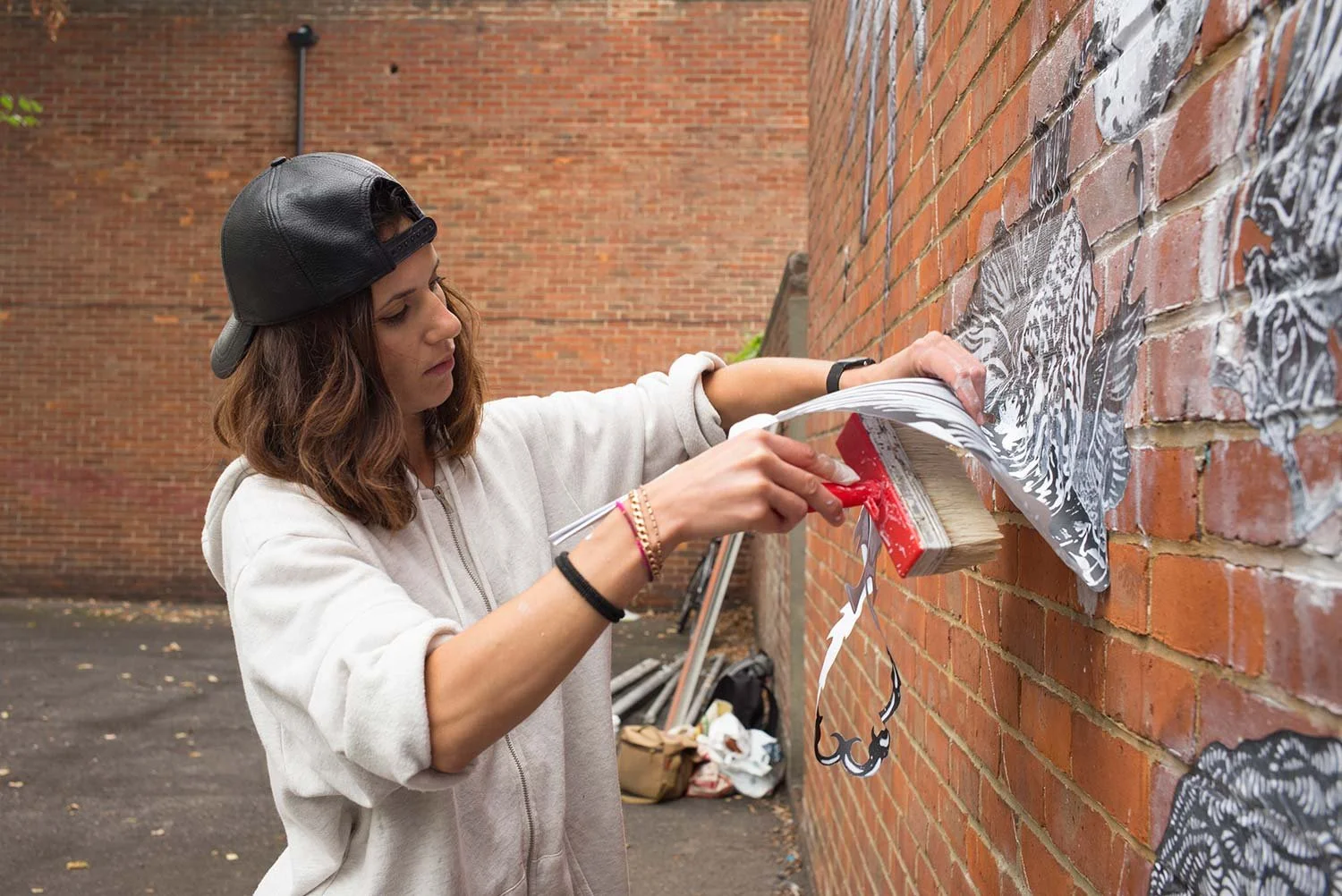
She began with paste-ups - intricate ink drawings printed large and wheatpasted onto public walls. Her earliest subjects? Jellyfish.
“I wanted to speak to everyone,” she explains. “To be visible to a lot of people who may not push the door of a gallery because they feel like they’re not going to understand it, or they can’t afford it.”
Brick Lane, with its rich Bangladeshi community, became a canvas and a cause: “Bangladesh is below sea level. If the seas rise, it could disappear. I wanted to put Brick Lane under the water. I wanted to have an ecological message. I didn’t want it just to do art, just to put my name out there. I was not looking to be famous. Of course, I was looking to be noticed because this is my passion. But I also wanted to do something good, to make people aware.”
Deep dive
The ocean’s grip on Mixe goes deeper than metaphor. Her first scuba-diving experience on a trip to Malaysia marked a point of no return.
“It felt like magic,” she says. “You’re staring at a rock and then it moves. And you realise it’s a fish, or a nudibranch, or something you’ve never seen before. It was like discovering another planet - but on our own Earth.”
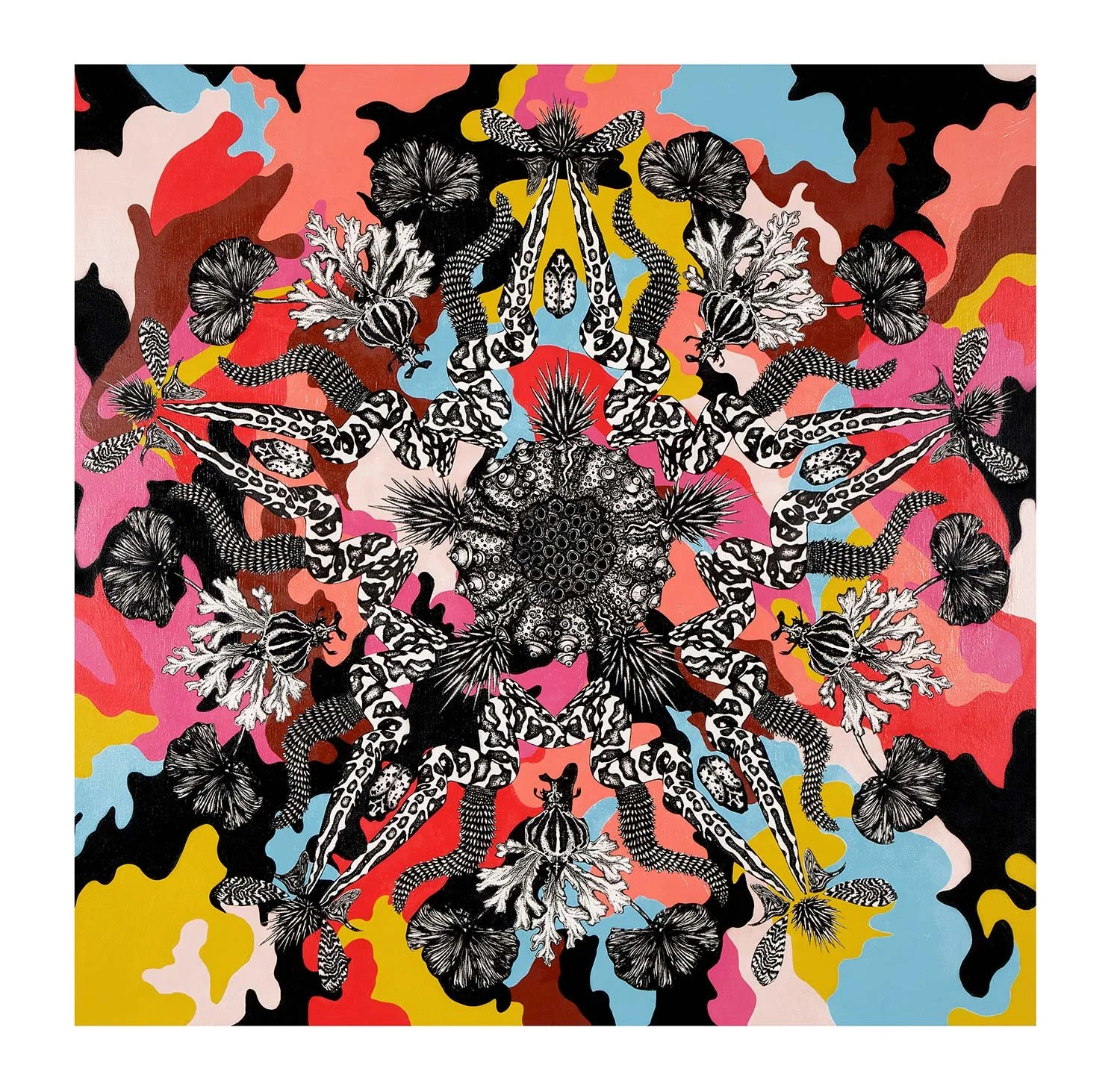
That revelation became the central force in her work. Diving gave her access to creatures rarely seen by the human eye. From there, she began translating them into art - not just jellyfish but sea butterflies, coral, sea angels and deep-sea organisms that float like alien spacecraft.
These organisms, both fragile and fantastical, became the faces of an ecological message. “People think I make them up,” she laughs. “I remember painting a sea angel on the street and a kid walked by with his mum and said ‘Wow, what a crazy imagination’. I told them ‘This is real. It actually exists’. That’s when the conversation begins.”
Mixe doesn’t want to preach. She wants to ignite wonder. “I wanted to be useful in a way. Because what’s going on with our climate, our planet, is really important and often people find it hard, like there’s nothing they can do about it. But I just think knowing more about it is the first step to caring.”
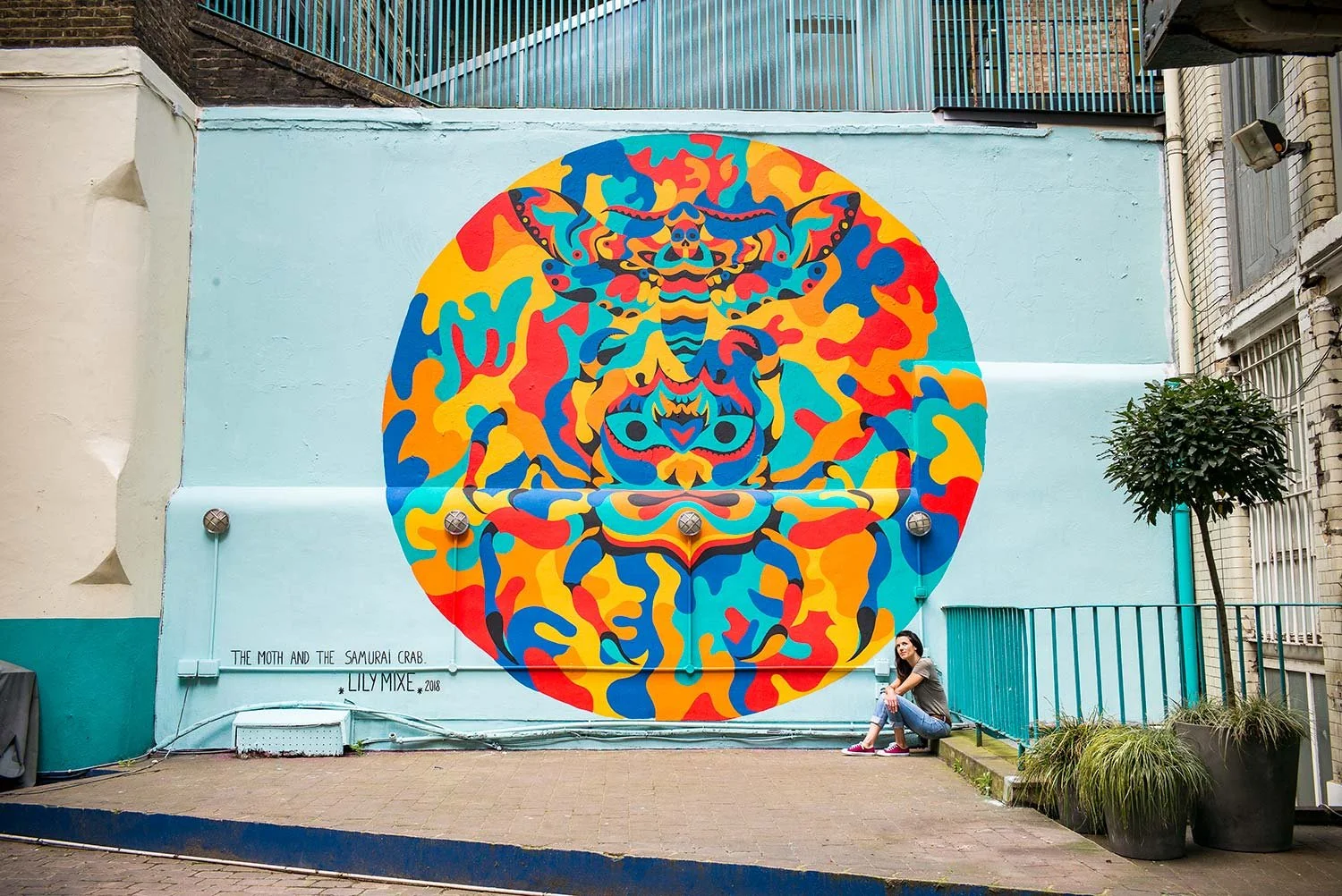
In 2016, Mixe created her largest street mural to date, Natural Order, in Shoreditch - a sprawling wall of more than 100 paste-ups of organisms that took weeks of preparation. “It’s still there today,” she notes proudly. “Eight years and counting.”
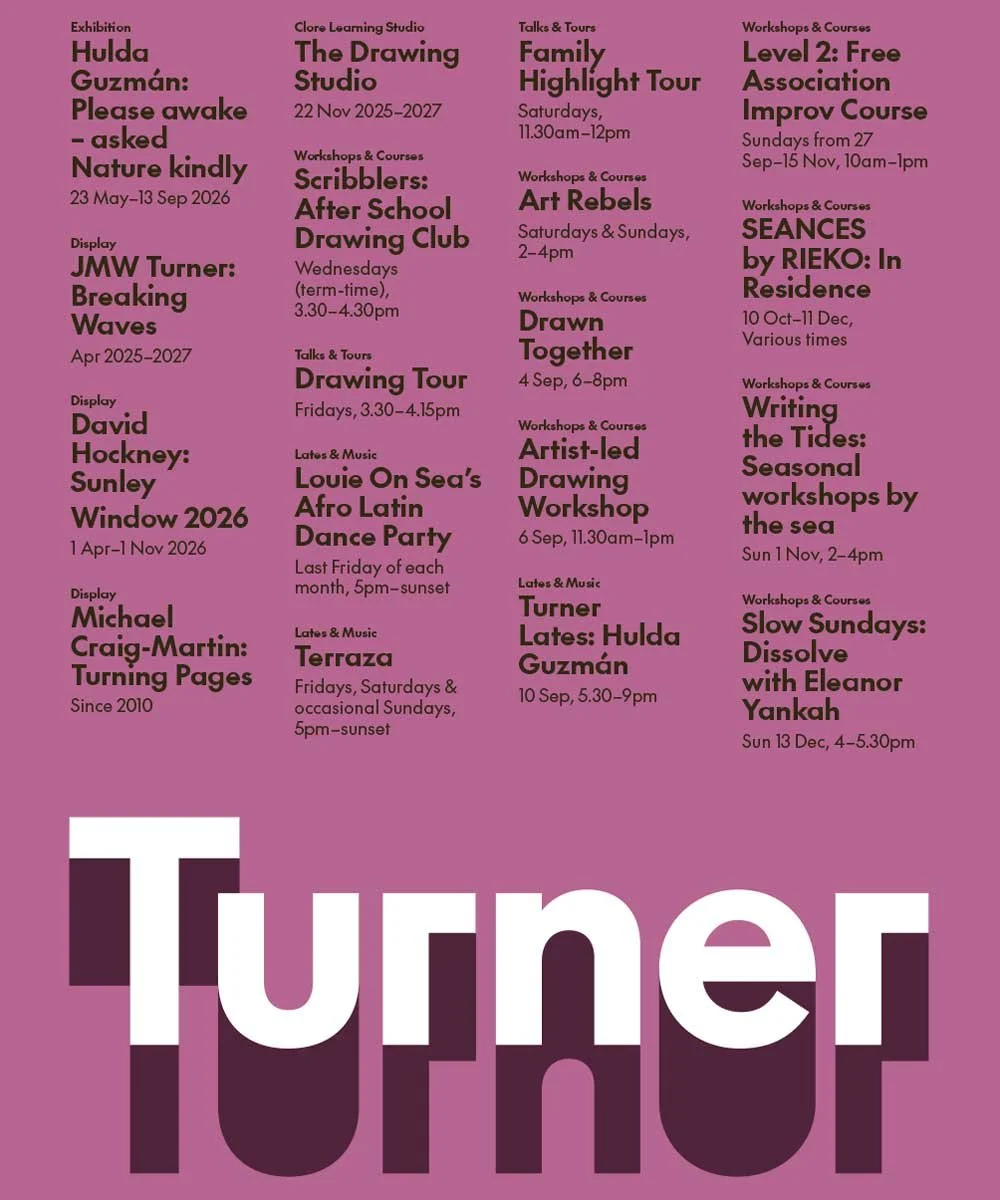
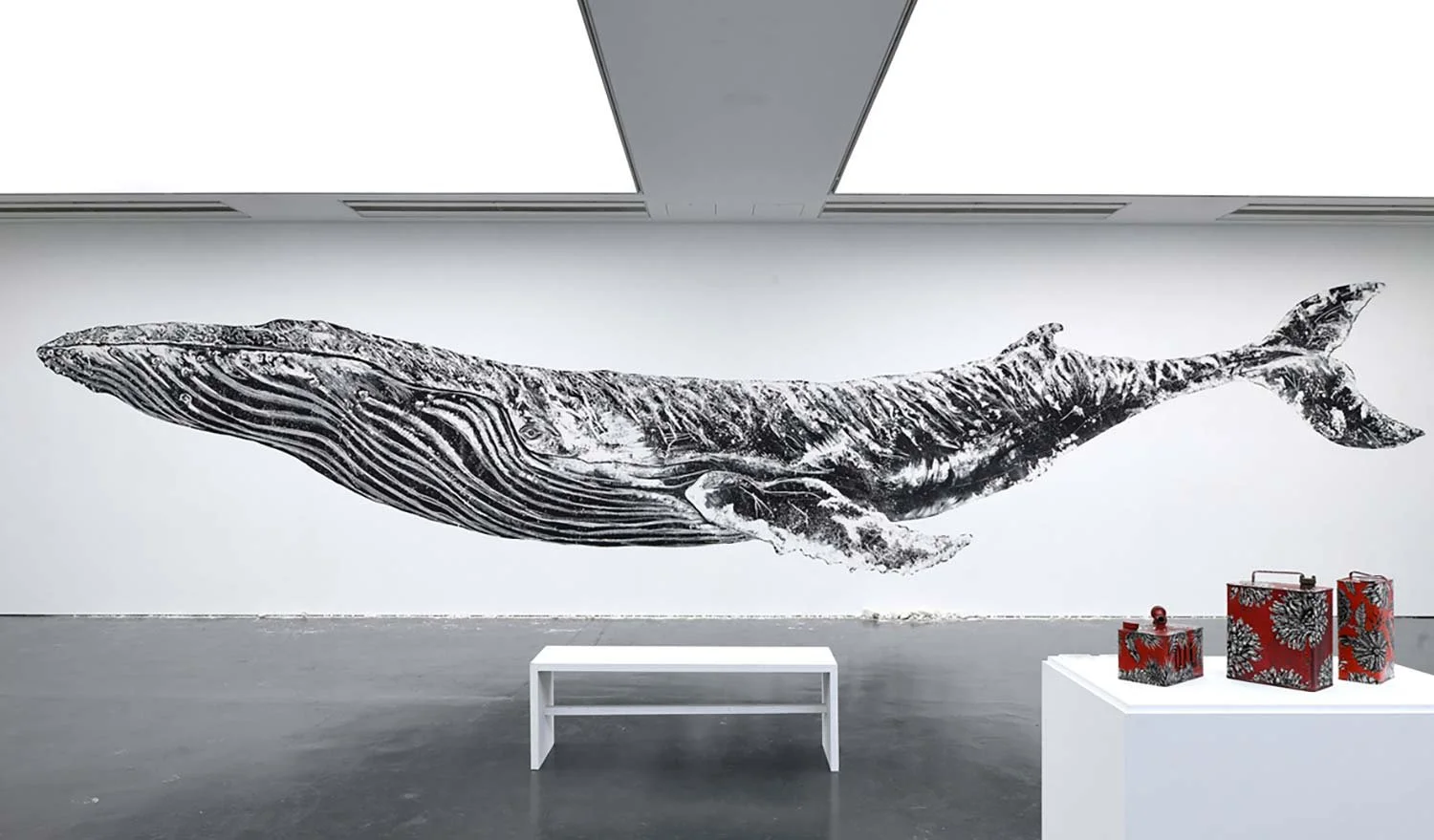
But her practice has evolved beyond wheatpaste. She now works across materials and scale - from paper drawings to full-size whale murals. In 2022, at London’s Saatchi Gallery, her Butterfly Effect solo show featured a life-size whale installation. “I wanted people to realise how small we are in comparison.” she says. A similar life-size minke whale now resides in the Learning Room at the Turner in Margate, painted originally as a temporary feature but that has now been there for almost two years. “They were supposed to get rid of it,” she says with a grin. “But it keeps reappearing.”
“The minke is one that you can spot. A couple of them have been spotted crossing the Channel this year. And that’s my fantasy, that you’ll be looking through the window and be able to spot one from afar. But the piece is just to show people what kind of animals live in the sea that we face every day.”
Mixe has taken her material choices to a new level, creating natural inks and paints from organic sources, beginning with chalk. “It started on the beach with my daughter,” she says. “We’d draw with chalk on the seawalls. Then I started bringing it home, crushing it with a hammer, filtering it - turning it into paint.”
Chalk, as it turns out, is poetic in itself: it’s made of ancient marine microorganisms. “To paint a whale using the remains of microscopic life? It connects the macro to the micro. There’s something very complete about it.”
This connection between medium and message, using nature to paint nature, has opened up new layers in her work. She’s now experimenting with handmade inks and planning an upcoming installation to showcase these materials alongside her murals.
“There’s something liberating about using chalk,” she says. “I’m not being precious with lines. I throw it on the wall. It’s meditative.”
Mixe’s path continues to evolve. Her next chapter includes printmaking, working with master printmaker Peter Bennett and the team at Atelier JI in London. “I’ve started doing engravings and etchings,” she says.
Despite the new directions, her mission remains rooted in the same oceanic truth: to shine a light into the depths and bring back what’s often unseen.
Lily Mixe’s minke whale will remain on show in the Turner until November 2025.
INFO: lilymixe.wordpress.com