Columnist Zahra Barri talks to Medway writer Sarah Hehir about her time on The Archers, life influences, teaching in a young offender institution and not meeting Peter Andre

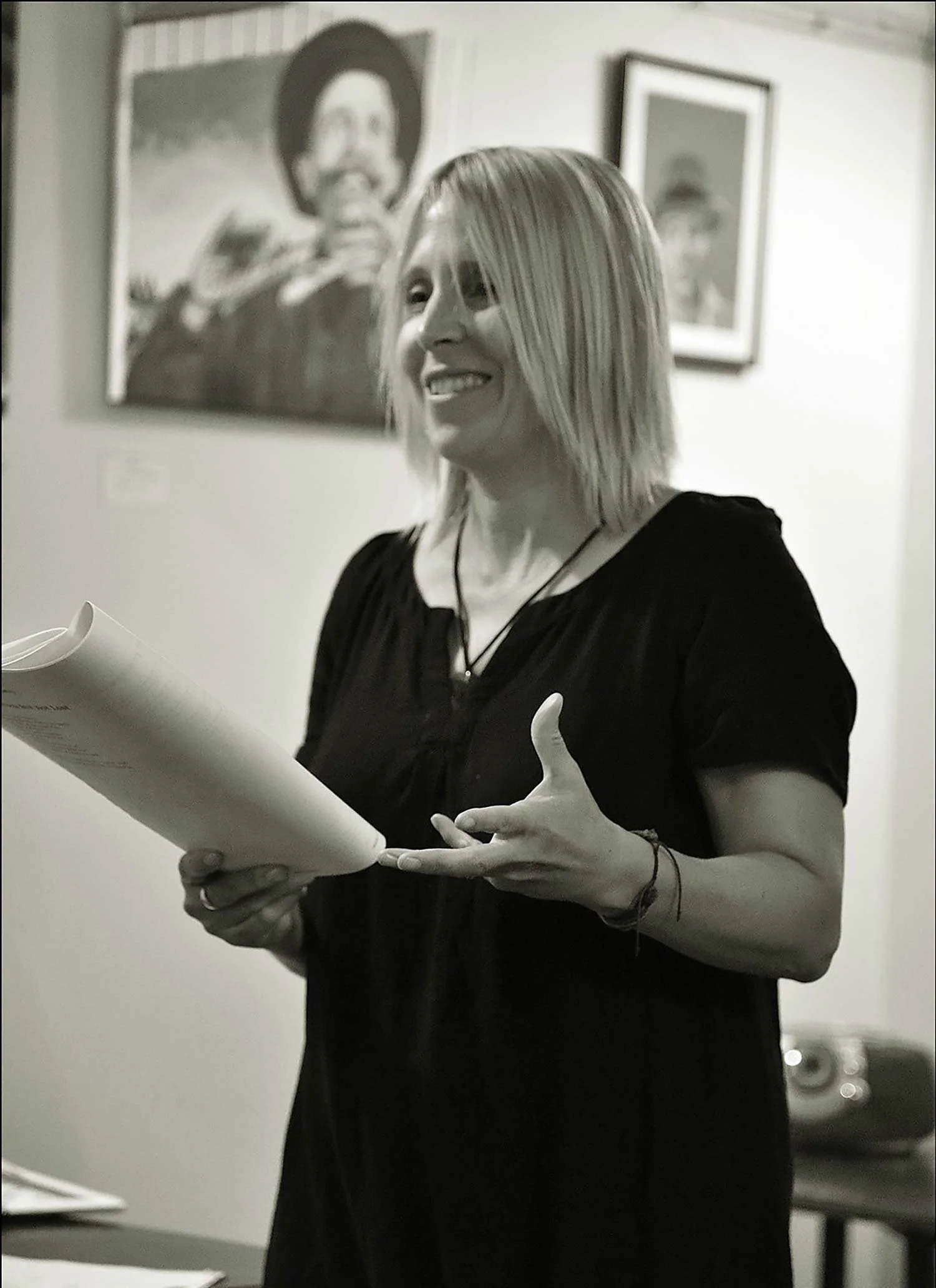
I first met the Gillingham-based writer Sarah Hehir at Medway River Lit Festival when I was promoting my novel Daughters of the Nile. I liked her instantly and it wasn’t just because she bought my book (although that was nice). It was also because when festival masterminds Sam and Barry Fentiman-Hill entrusted Hehir to interview Booker Prize-winning writer Sir Ben Okri she did so with the journalistic acumen of Alan Yentob and Melvyn Bragg.
A few months later, we bumped into each other in another literary landscape, this time outside Medway on a writing residency in the Cotswolds. There, Sarah was working on her Zeus Coded collection of poems, “exploring mythical, historical and contemporary moments where men and/or patriarchy behave like complete Zeus Coded pricks”. (Warning: May Contain Greg Wallace). At the residency I learnt more about her expansive writing career on The Archers, Doctors and her very own TV series, as well as working with Peter Andre.
You’ve done all genres - stage, screen, Peter Andre. What is your favourite?
I like the variety! I work well with different projects on the go.
Writing for the theatre in this country is economically challenging unless you’ve a trust fund! And yet, when you do find the money, partners and platform to develop and write a play, it’s fantastic. I love the collaborative nature of it, the way that my writing is then interpreted by a team of creatives who all add their layer of meaning. And having a live audience watching your work is thrilling - and terrifying!
But there is also a joy in writing for The Archers and its dedicated audience of up to six million people. I’ve always loved audio drama. Concentrating everything in the soundscape makes you really focus on character and place. Writing on soaps has sharpened my storytelling skills. A radio audience is often multi-tasking. You have to work harder to keep their attention, so dialogue has to be compelling and scenes need to have pace and purpose, whether it’s the climax of a modern slavery story or a farmer feeding the cows.
You won the inaugural BBC Writer’s Prize with your script Bang Up, which aired on Radio 4. Tell us more!
Winning the BBC Writer’s Prize gave me the confidence to call myself a writer. I opened the email on a train home with my three young daughters and couldn’t believe it. Bang Up was based on my time working as a teacher in Rochester young offender institution.
The experience of watching my play recorded at Media City in Manchester was really exciting, and then hearing it broadcast on Radio 4 made me believe writing could be my job. But it took almost another decade to get to the stage where I could stop teaching and work full-time as a writer.
You have to keep believing in yourself and the stories you want to tell. When my daughters were little, I worked after they were in bed. Then, once they were teenagers, I got up early to write during the school holidays. The arts is not a level playing field. Being a good writer is the baseline. I’ve found a mixture of honest fury and reckless optimism helps. It’s a really good idea to build a community of fellow artists nationally and locally to champion each others’ work.
Here, here, that’s ‘Cene’s modus operandi, shining a spotlight on local talents like you. I was excited to learn that you have your own TV show ‘in development’; how did that come about?
It’s based on an unusual time in my life. After BBC’s Doctors finished, the writers were invited to apply for a place on a course about pitching our own shows. My idea was picked up by BBC Studios and now I’m in this weird period of writing about myself and my family - working out what to fictionalise and what to keep exactly as we lived it. Though it really was one of those times when truth was stranger than fiction.
I enjoyed our writing residency so much, living in an 18th-century mansion, discussing poetry by the fire each night. We were like Austin and Emily Dickinson. You taught me so much about poetry you convinced me to join Medway’s Common Ground Poetry Club, which you set up at Intra Arts with Charlotte Ansell. It’s become a great place for me to trauma-dump about ex-boyfriends, hasn’t it?
Yes! And while you do that, others learn about poetic forms, share poems, offer feedback and generally find some common ground through our passion for writing.
You do so much for the Medway arts scene. I recently got to see a work in progress of your latest theatre project Man or Bear at Glassbox Theatre. Tell us about that.
I wrote a play called Zero Down that was produced by Katie Hurley, who also acted in it. Katie got the play programmed at Theatre 503 and Edinburgh Fringe in 2016. Last year, she asked me if I was interested in getting together to write a new play. She secured us research and development money to explore violence against women.
We take seriously the role of theatre to engage. We’ve worked with school pupils and the community in Medway to explore the themes. It’s always thrilling to run into the maze of other people’s imaginations and see where it takes you.
So real Medway voices inspire your work! What other things influence you?
I love Derry Girls. It’s perfect.
Glory Dazed by Caitlin Moran was a huge inspiration. I saw it at Soho Theatre after not going out much at all when our children were young. It’s based in a Doncaster pub and made me realise I could tell my own stories - that what I had to say might just be interesting enough.
Short Cuts by Raymond Carver and Brokeback Mountain by E. Annie Proux - the small and ordinary as ways to explore the universal and extraordinary.
Why do you write?
It’s a weird mix of escapism and properly facing what’s most beautiful and most disturbing. I like giving a platform to sidelined stories. I’m good at creating complicated characters that inspire empathy despite their flaws. I write great parts for women. There still aren’t enough parts that break away from the roles supporting the central male character.
What’s your favourite literary thing to do in Kent?
I love Medway River Lit.
Finally, how was working with Peter Andre?
Peter and Junior Andre are in my short film Snapcatch. It’s a poetic film that explores online safety. Sorry to disappoint, but I wasn’t there during filming because it was during the pandemic when filming was very restricted.
NOOOOOOOOOOOO!!!!!!!!
Yes.
Follow Sarah on IG @sarahwebsterhehir
Both Zahra and Sarah are at the Medway River Lit Festival in November. Check the website for listings: www.medwayriverlit.co.uk

Zahra’s novel Daughters of the Nile is published by Boundless and is available here: unbound.com/products/daughters-of-the-nile
Subscribe to Zahra’s Substack Daughter of the Nile here: substack.com/@zahrabarri