Rob Birch, founding member and iconic frontman of the Stereo MC’s, talks about the band’s return to the road and recording, while also sharing his love for his home in Margate

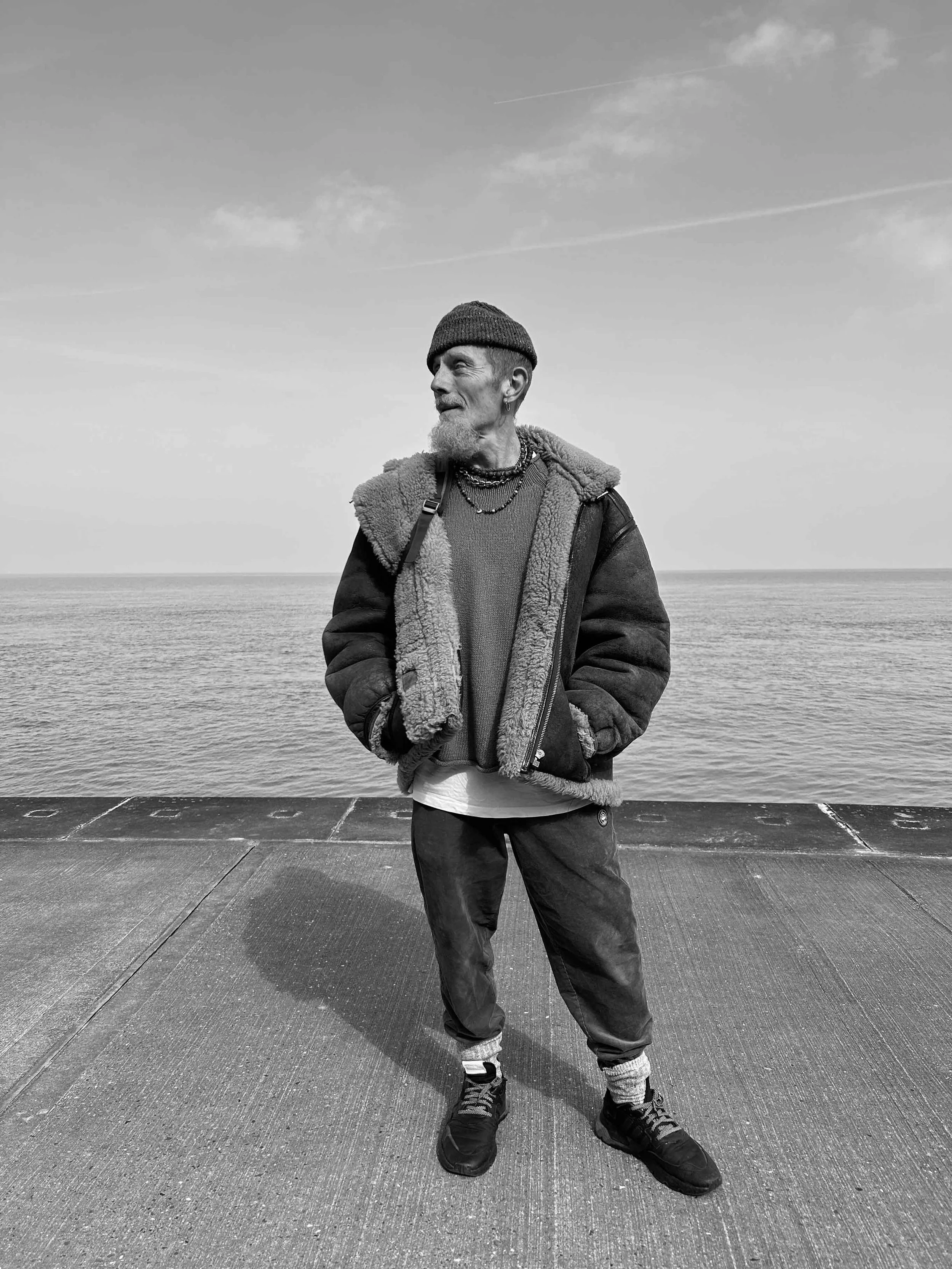
Rob Birch (Image by Cynthia Lawrence-John)
The 1992 iconic album and its title track Connected from Stereo MC’s are synonymous with a shift in what popular music could be.
Quantified as an early incarnation of UK hip-hop with foundations in electronic dance music, Stereo MC’s were pioneers of a sound that wasn’t easily described but unreservedly theirs.
While the album is full of memorable tracks, it was the timeless hit Connected that has reverberated around the world ever since its release. After an appearance on The Tonight Show Starring Jimmy Fallon in the US, the group returned to the road for their first coast-to-coast tour Stateside since 2001 before returning to home turf with the True To Life UK/IE Tour, the first in more than a decade.
The core line-up featuring founding members Rob Birch (Rob B), Nick Hallam and Cath Coffey, joined by drummer and percussionist Tansay Omar, took to the stage at Dreamland in Margate late last year. And for Rob Birch, it was something of a homecoming, with the iconic frontman now living in the Kent seaside town.
We caught up with Rob to find out more.

Stereo Mc’s (Image by Julia Khoroshilov)
What has it been like stepping back into an American spotlight?
It was great to play a live TV show again, especially in front of a real audience. We were genuinely honoured to be doing it with The Roots - we’ve been fans of that band and of Questlove for years. So that was a big privilege and a real pleasure. It’s a total trip being on a stage like that - the big TV cameras, the lights, the buzz from the crowd - it’s just amazing. And it was snowing outside, too, which I loved. It made the whole thing feel kind of surreal and magical.
It’s been two decades since your last US coast-to-coast tour - how did the audiences compare with the early days?
They felt really sincere, actually. I wasn’t sure what to expect after so long, but our love for performing has only deepened over the years. We’ve become more experienced, but we still really enjoy doing it - not just out of habit but because we genuinely love being up there. I think the crowds can feel that.
We played a festival in the States where it started raining right as we came on, and the whole crowd stayed put - no one left. They stood there in the rain with us and that meant a lot. It wasn’t like we were the big draw of the day, but the energy was real. I love when a crowd feels like a conversation - when you’re all vibing on the same wavelength, trying to express what you think about the world without spelling it out too literally. Everyone just starts to feel all right together, and that creates a really nice energy.
Honestly, I didn’t see much difference between any of the crowds. At the end of the day, we’re all human beings. If we’re not too caught up in divisive stuff, we can all sit in the same room and have a great time together.
Connected and Step It Up still sound as fresh now as they did in the ’90s - what keeps those grooves alive for you?
Honestly, I’ve no idea - I just know I still love performing them. They still make me lose myself every time. I’ve never had that problem some artists talk about, where they can’t stand playing their big hits anymore.
I feel lucky. Those songs connected with people and if they still want to hear them live, that’s a blessing. There’s no way I’d ever get negative about that - not a chance.
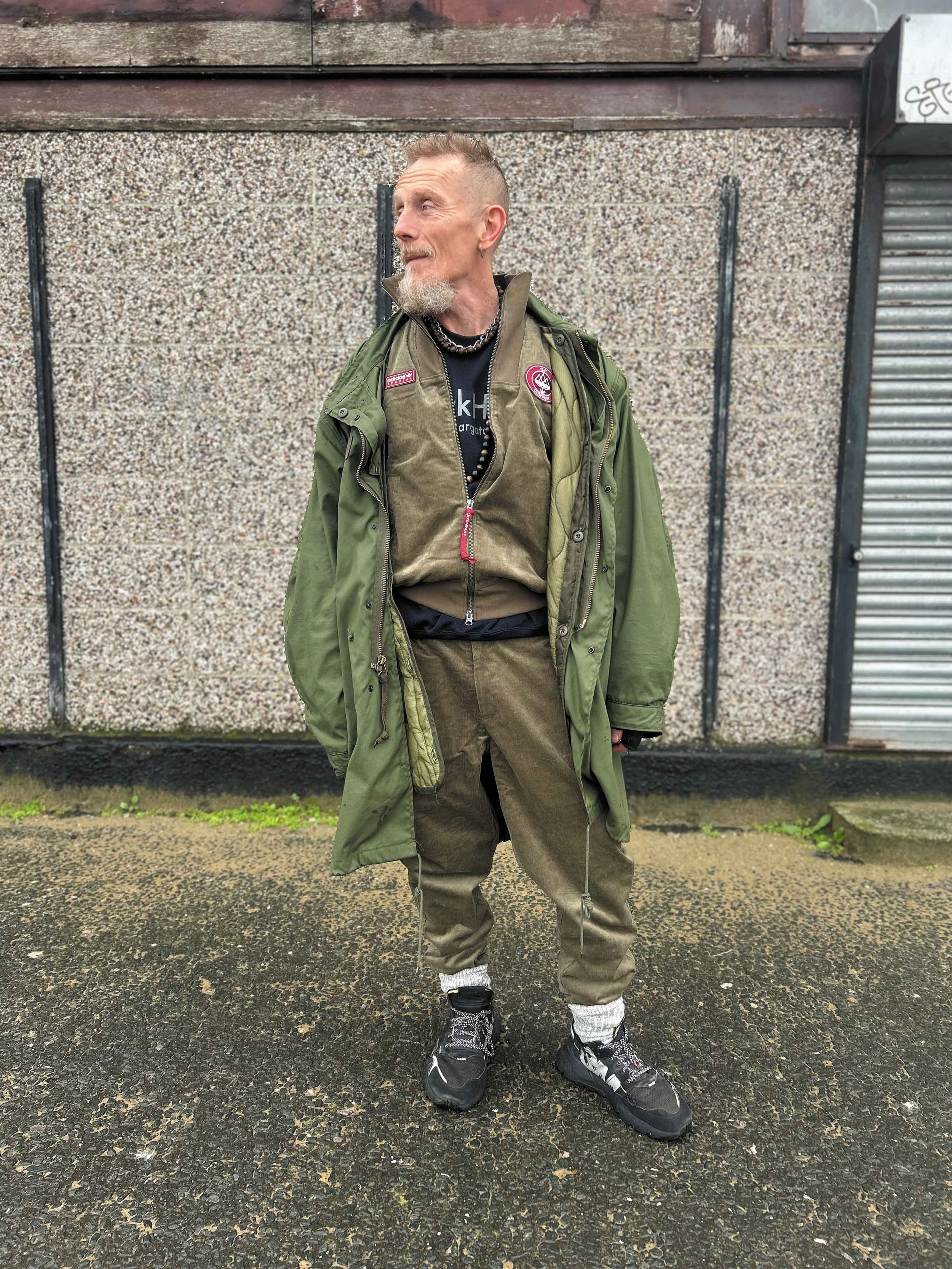
Rob Birch (Image by Cynthia Lawrence-John)
When you hear those tracks on the radio or TV today, do they still feel like yours, or have they taken on a life of their own?
Yeah, they’ve definitely found their own legs. That’s what music’s like - you plant these little seeds, put them out there, and they grow. Some become diplomats, some become artists, and some enjoy being in the garden. They all find their place in the world.
I try not to feel too much ownership over the music anymore. So many people and moments influence what you create - they’re part of the energy around you. If I hadn’t met certain people or been in certain places, those songs wouldn’t exist. Music feels like it comes out of thin air sometimes - it’s a gift. You have to keep the door open and let it flow through. I’m happy those tracks found their way and I try not to overthink it. I just hope the journey continues and that I stay focused on staying creative.
The Stereo MC’s sound always blended organic rhythm with electronic edge - how do you keep that balance in 2025?
Nick runs an Afro house label and I DJ monthly on Margate Radio, so we’re constantly surrounded by new sounds - new and old. That keeps us learning. You’ll hear something and think ‘How did they do that?’. It pushes you to experiment, the same way it did when we first heard Public Enemy’s Rebel Without a Pause - that sense of shock and inspiration still drives us.
I’m always making music, but these days I’m trying to be more natural with what comes out. I write lyrics, sometimes more like poetry, and not everything has to be for the dancefloor. Maybe some of it can be storytelling, with music as the backdrop. I’m experimenting with that - telling stories from the heart.
At this point in life, I want to feel the impact of what I’m creating. If it feels right there, in the heart, that’s enough. I’m not chasing whether it’s a ‘banger’ anymore. It’s just about staying real and inspired.
What first drew you to Margate - was it the sea air, the creative energy, or something else entirely?
The initial inspiration to check out Margate and the area came from a totally unconnected source and issue. I was talking to a guy called Bobby, who manages the beatbox/flute artist Nathan Flutebox Lee. We were working on the soundtrack to a TV series called Snakes in the City and I wanted Nathan to play the theme in his style on the flute.
As we were talking over details for the session, he mentioned he was sitting on the beach at Pegwell Bay, telling me what a trip it was to live there and how the housing costs were much improved compared with London, plus you could hop on the fast track from Margate and be in south London in two hours.
I’ve lived in south London since the early 80s and at the time was renting in Crystal Palace with a view to getting my own place sometime, but London prices are scary.
This was the pivotal conversation that led me to step out of the smoke for the first time in around 35+ years and it didn’t take much convincing.
I think most human beings have some kind of spiritual affinity for the sea and as soon as I came close to it I felt her magnetic draw like I was a child again. The clean air and sunshine and the ease of movement and reduction of stress were big players in confirming it wasn’t rocket science to make a move.
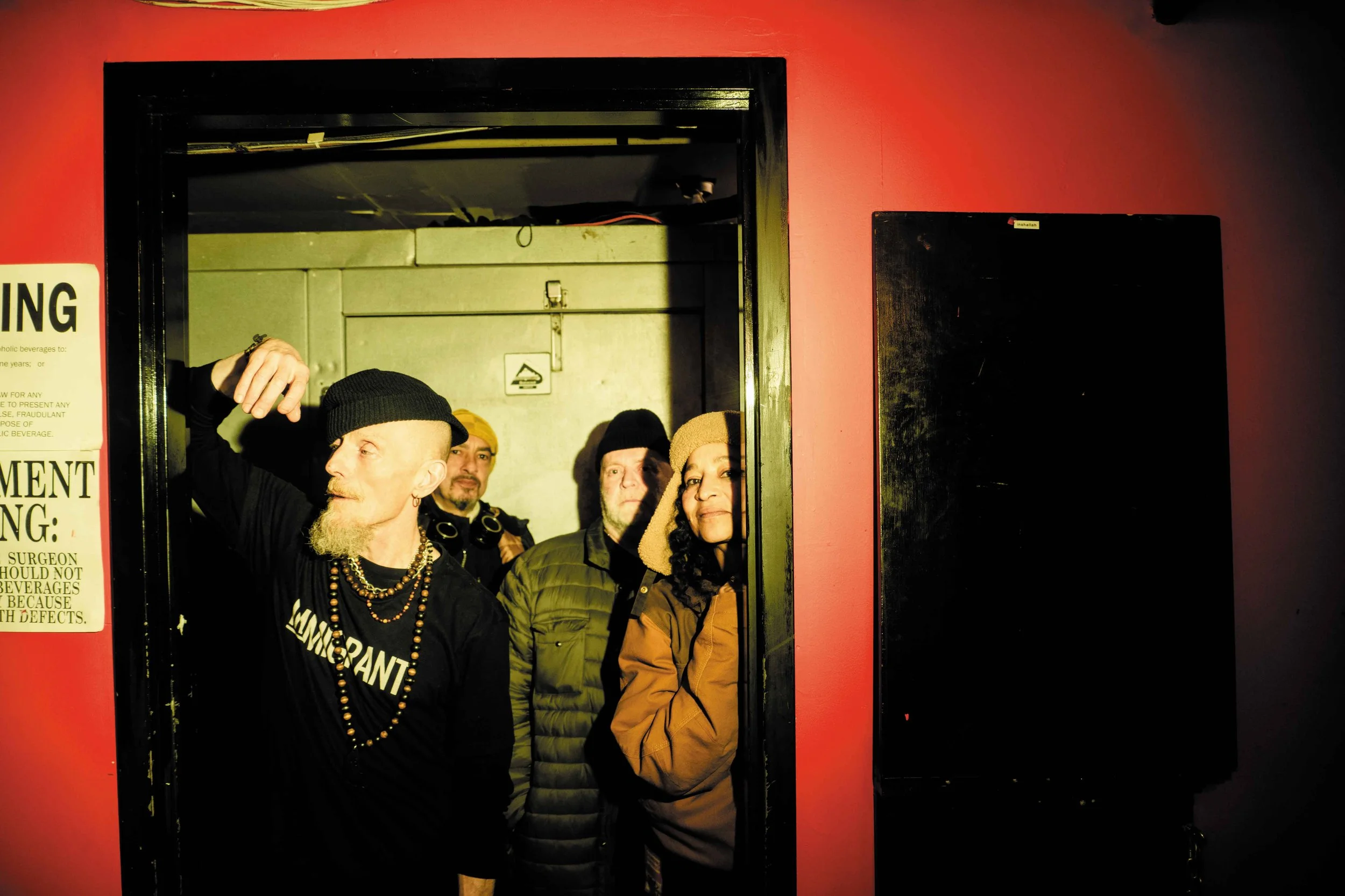
Stereo Mc’s (Image by Julia Khoroshilov)
Margate has become something of a magnet for artists and musicians in recent years. How does living here compare with your time in London’s music scene?
Margate is a different energy. It took me some time to discover the community here and for a year or so I was something like a hermit, coming out of my studio or back from gigs just to find good places for food - I come from Brixton mainly in adult life, so my diet is not English-based - and go swimming. One of the reasons I live in Westgate is there is a pool, Hartsdown, close by - major factor!
Admittedly, it was a culture shock at first, but slowly I started meeting people that I related to in spirit and culture. My first discovery was WerkHaus vintage boutique and the co-founder Cynthia Lawrence-John, who I bumped into at Dora’s when they used to sell those wicked doughnuts. I knew at first sight she was a kindred spirit and as destiny would have it has become my soulmate.
The cool thing about the creative scene here is it operates on a word-of-mouth ground-level vibe and people are far more open to introduction and collaboration.
Although London is a thriving, diverse, vast source of creative energy, it can be difficult to penetrate.
I think through meeting Cynthia, I met Paul Camo, who invited us to host a show on his radio station [Margate Radio], which we’ve been doing for a while now and I love it.
It’s like the saying ‘you can feel lonely in a crowded room’, which is sometimes the case in big cities.
I think the time I spent on my own was valuable here in teaching me that my own company was actually OK, you know? During Covid I spent many months with my son, which was a special transformative period for both of us, I feel.
I’m in no rush here, but I am finding out about other artists, studios, musicians and activities, organisations like the People Dem Collective, who introduce new art to the area, that expand me somehow and I feel like some time down the road we will combine.
I’m definitely settled now and feel my creative path is unfolding without pressure.
Has the change of environment influenced your sound or creative process in any noticeable way?
Yes, I think so. Life in itself is different here. I have space to see the horizon at the edge of the sea. I have space to move with less traffic, which brings less internal stress. I have more space in my mind for some reason and quieter thoughts. These all influence how I operate and I’m gradually dismantling old mental attitudes and beliefs that hold me back or don’t allow for change. Change is learning.
Change doesn’t come overnight. Many things are learned and improved and the journey is appreciated more than the destination. There will always be a destination, but the pathway is for now. That is something I feel more here.
Another thing is flexibility, not being too rigid in daily structures. Keep my disciplines but let them float a bit, stop by the sea for a while, walk a bit… I am a musician and am blessed with my own schedule. Being in this environment has helped me to appreciate this more and I am starting to prioritise creative acts over conventional domestic taboos.
What’s been the most surprising thing about moving to Margate?
There is no place in Thanet like Margate. It is generated by this artistic community and supported by the people who love this diversity of independent shops (the book shop is amazing), galleries, venues, cafes, massage, food spots, second-hand furniture and local supermarkets. Northdown Road - best barbers, plantains, organic food etc - feels like south London to me, so you can almost sidestep the corporate monopolies. It carries a therapy in its wind, I feel. Sorry for anyone I forgot.
Thanks for these questions, they brought to my mind a refreshed gratitude for this place I’m blessed to live in.
And is it true that there’s new material coming?
Yeah, there are a few projects in the works and some of them are quite experimental. We’ll see where it lands. Personally, I want to make the record I want to make - not the one I think I should make.
If that surprises or even disappoints some people, I can live with that. I’ve got to stay true to what feels right. That’s what keeps it exciting, and that’s what keeps it alive.