SOAK IN SENSES: Would you try forest bathing in Kent?
ParkBathe is the wellness practice helping people rediscover the power of urban green spaces


“... suddenly people start hearing sound in a completely different way.”
In an age of endless notifications, algorithm-driven attention spans and screen-saturated lives, a simple wellness idea is gaining ground in Britain’s urban green spaces: slowing down.
The roots of that notion stretch back to Japan, where the practice of shinrin-yoku - literally translated as ‘forest bathing’ or ‘taking in the forest atmosphere’ - emerged during the 1980s. Faced with rising levels of workplace stress and what became known as ‘technostress’, Japanese health authorities encouraged people to spend time immersed in nature. The results were so promising that forest bathing evolved into a recognised public health intervention, supported by decades of research and prescribed to millions of people each year.
The concept sounds almost disarmingly simple. Walk slowly. Pay attention. Listen to birdsong. Notice colours, textures and smells. Yet its growing popularity raises an intriguing question: in a world obsessed with doing more, what happens when we deliberately do less?
That question sits at the heart of ParkBathe, a community initiative that has adapted the principles of Japanese forest bathing for urban parks in the South East.
Leading the project is Vanessa Potter, author, TEDx speaker and former television producer, whose own work has increasingly focused on the intersection of wellbeing, neuroscience and human behaviour.
“Post-Covid, there was an opportunity to get people back into parks, but not just parks for walking, talking, football or exercise,” she explains. “Actually for wellbeing, which is something quite different.”
ParkBathe emerged in 2021 from conversations between Vanessa and a health researcher from the University of Derby who was also a trained forest-bathing guide. Together they recognised that while the traditional Japanese model had compelling evidence behind it, it was not necessarily practical for modern Britain.
“In Japan, forest bathing is actually about three hours long,” she says. “But if Keir Starmer says ‘Go to the woods’, it’s not really going to land. What boss is going to let you disappear into the woods for three hours? And where are you going to find ancient woodland?”
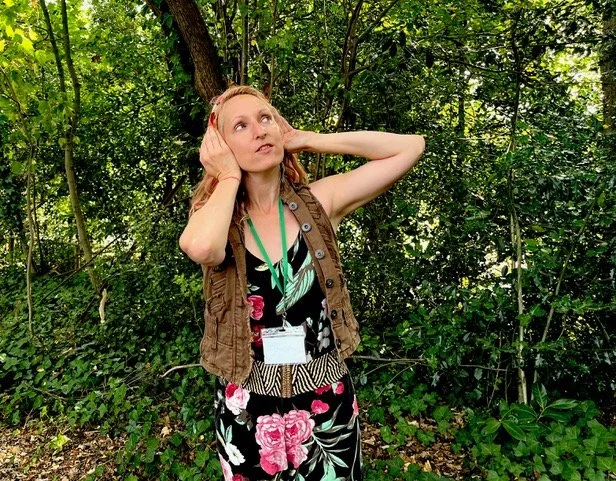
Instead, the pair reimagined the concept for the realities of urban life.
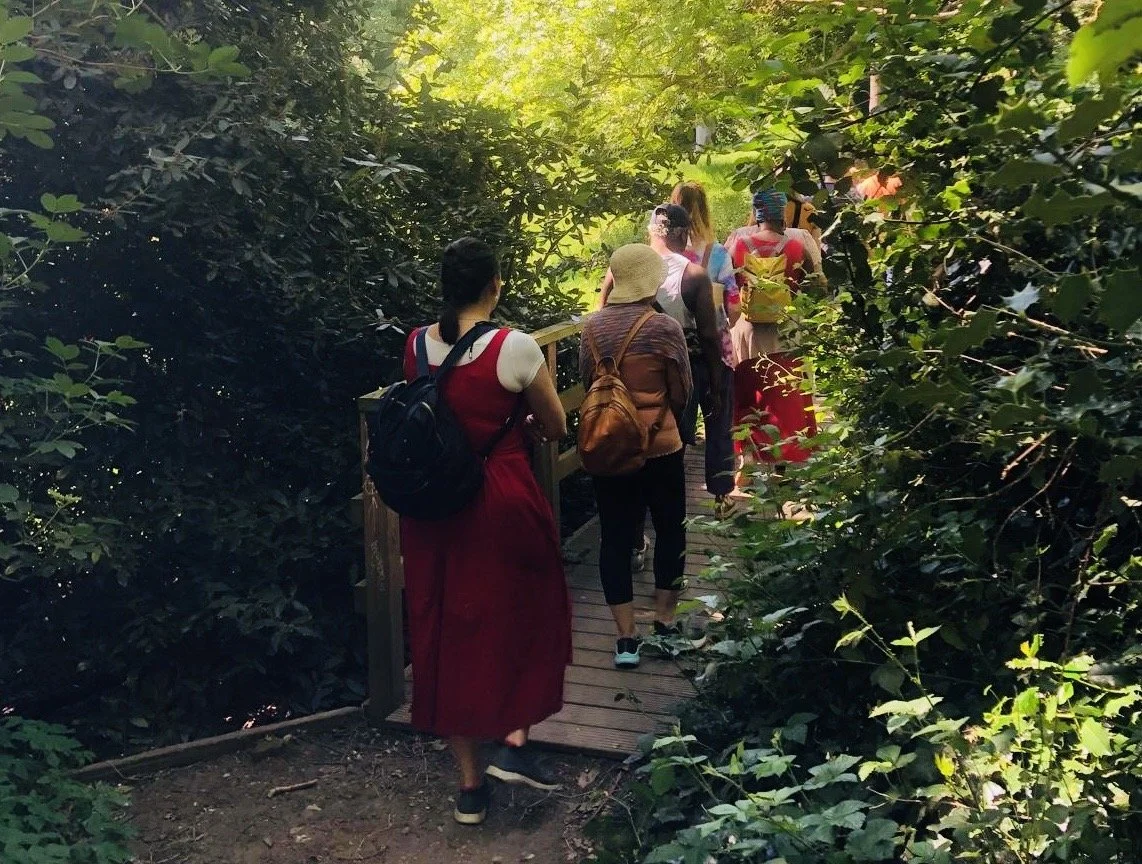
Today, ParkBathe delivers free, one-hour, peer-guided walks across urban green spaces in Croydon, Bromley, Beckenham, Southwark and Lambeth, running more than 120 walks annually. The programme has also received National Lottery funding to expand its reach.
The organisation is also keen to grow beyond its existing locations and is exploring opportunities to bring ParkBathe to other parks and communities in Kent through partnerships and training programmes.
CAPTURING QUIET
At first glance, the walks appear almost uneventful. Participants move only a few hundred metres. There are no fitness targets, no competitive goals and no pressures to socialise. But this is all very deliberate.
“It’s a slow silent walk but with the intention of moving you very much into your senses,” says Vanessa.
Participants are guided through a carefully designed sequence of sensory exercises involving sight, hearing, touch and smell. The approach was shaped by research and later supported by a published study demonstrating the wellbeing benefits of a ParkBathe session.
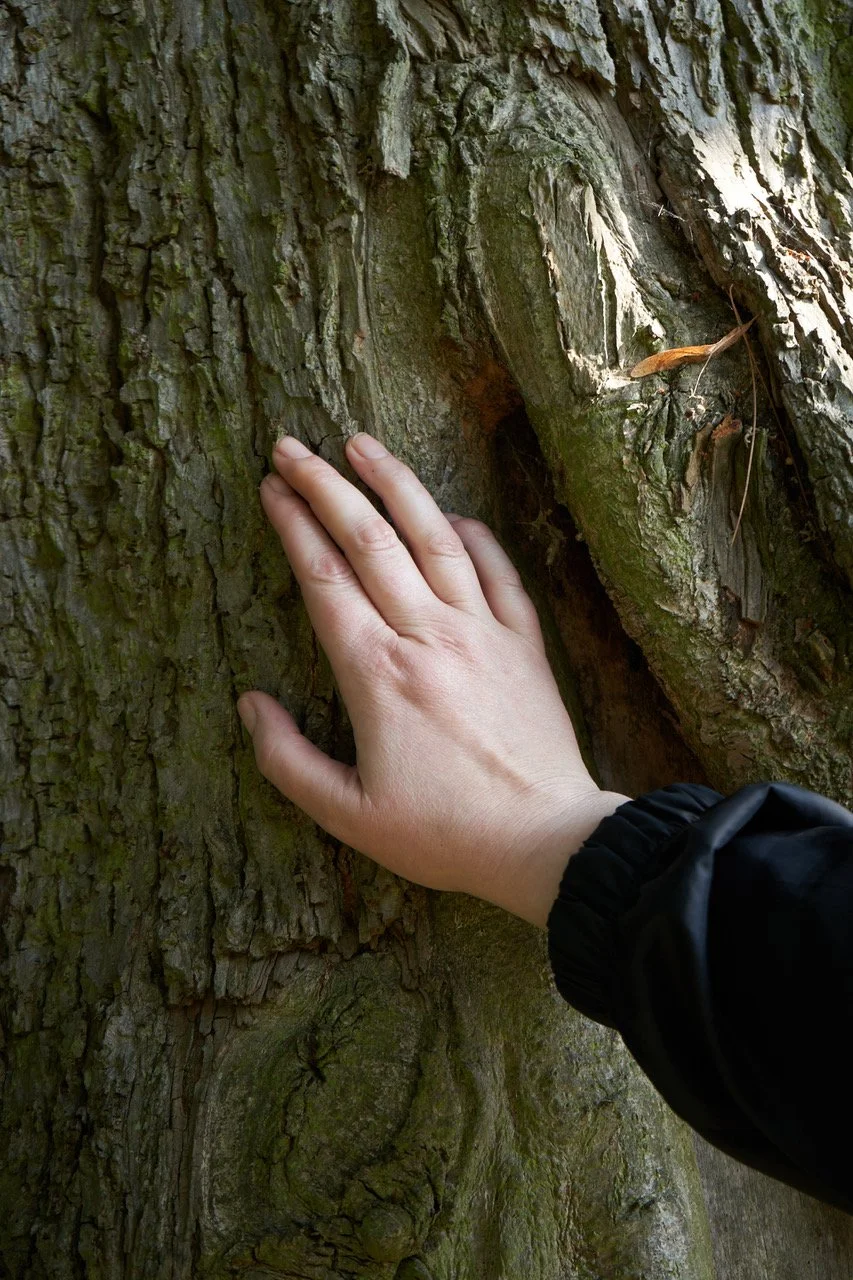
One exercise simply involves standing with eyes closed and listening.
“It sounds so innocuous,” she says. “People think ‘Well, obviously I can listen’. But nobody ever does that. Then suddenly people start hearing sound in a completely different way.”
The effects can be surprisingly profound.
“We see people change their physicality,” she says. “Their shoulders drop, but it’s more than that. They move differently. Their faces become much more relaxed.”
For some participants, the experience provokes reflection rather than relaxation.
“People sometimes say things like ‘I feel a little bit sad’ because they realise how much of life they’ve rushed through,” Vanessa explains. “One woman told me she’d spent the whole session trying to remember the last time she’d experienced that level of quiet.”
The project’s success may lie partly in what it does not require. There is no expectation to share personal stories or discuss mental-health challenges. Participants can remain silent throughout.
“Your walk could have all sorts of different people on it, but because you don’t have to go and tell your story you’re just a human being walking around a park,” says Vanessa. “You don’t even have to say your name. We get people who come and do not say a word, and that’s completely normalised.”
This accessibility has made ParkBathe particularly valuable as a form of green social prescribing - the growing healthcare movement that connects people with nature-based activities to improve wellbeing.
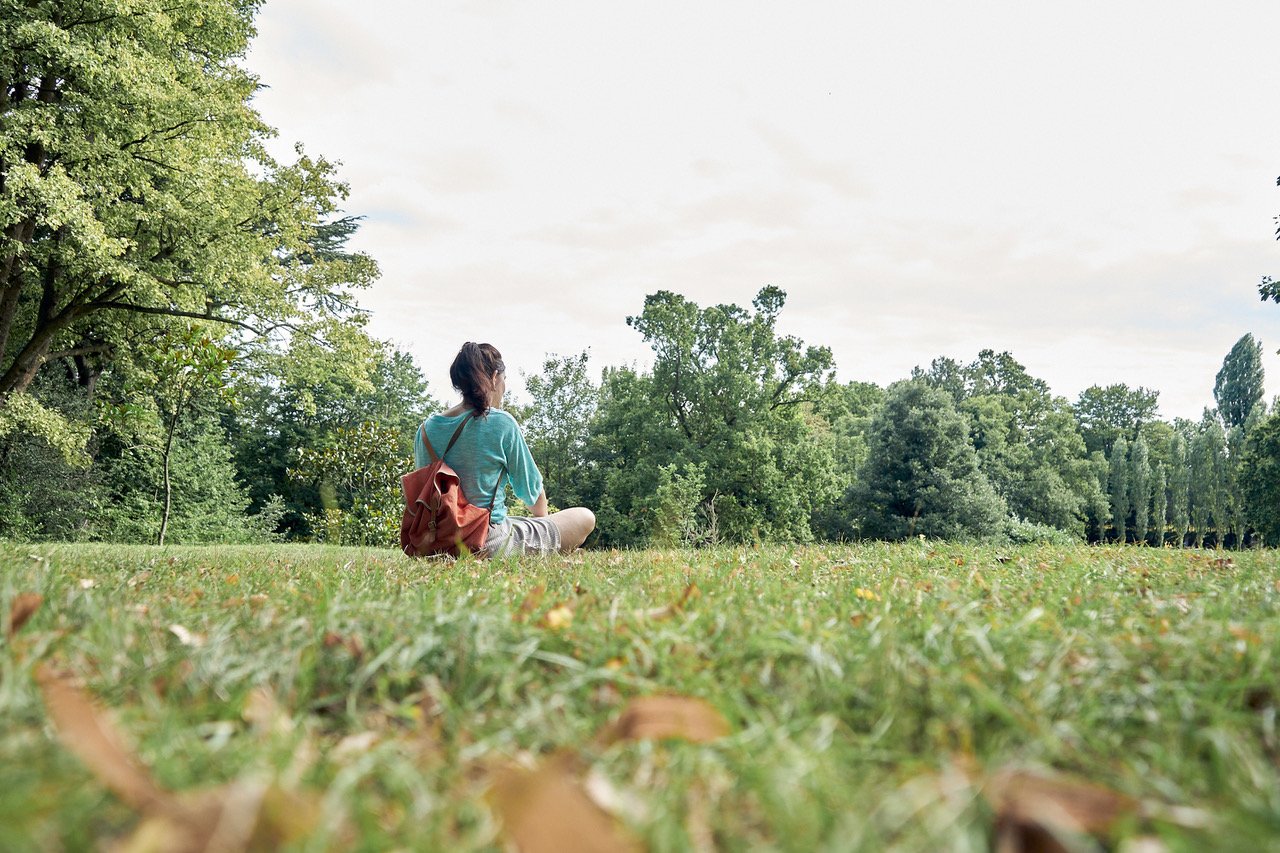
A key feature of the programme is its peer-led structure. Many walk leaders began as participants themselves.
“That’s one of the strongest things about these walks,” Vanessa says. “People have been anxious, they’ve struggled, they’ve come to the sessions and found them helpful. Then they become volunteers, train up and eventually lead their own walks.”
The result is a model designed not simply to deliver wellbeing classes but to create sustainable community networks.
Perhaps the most striking aspect of ParkBathe is its challenge to modern assumptions about productivity. In a culture where every moment is expected to be optimised, monetised or shared online, spending an hour noticing leaves, birdsong or shifting light can feel almost radical.
“This is the one hour of your life with no tech around you,” Vanessa says.
That idea that wellbeing may begin not with adding something new, but with paying closer attention to what is already there, is increasingly resonating.
A growing number of people are discovering that sometimes the most powerful intervention is simply to stop, look up and listen.
INSTA: @parkbathe