Margate’s Ellen Russell on the artform that keeps you watching…
Have you been mesmerised by tufting?

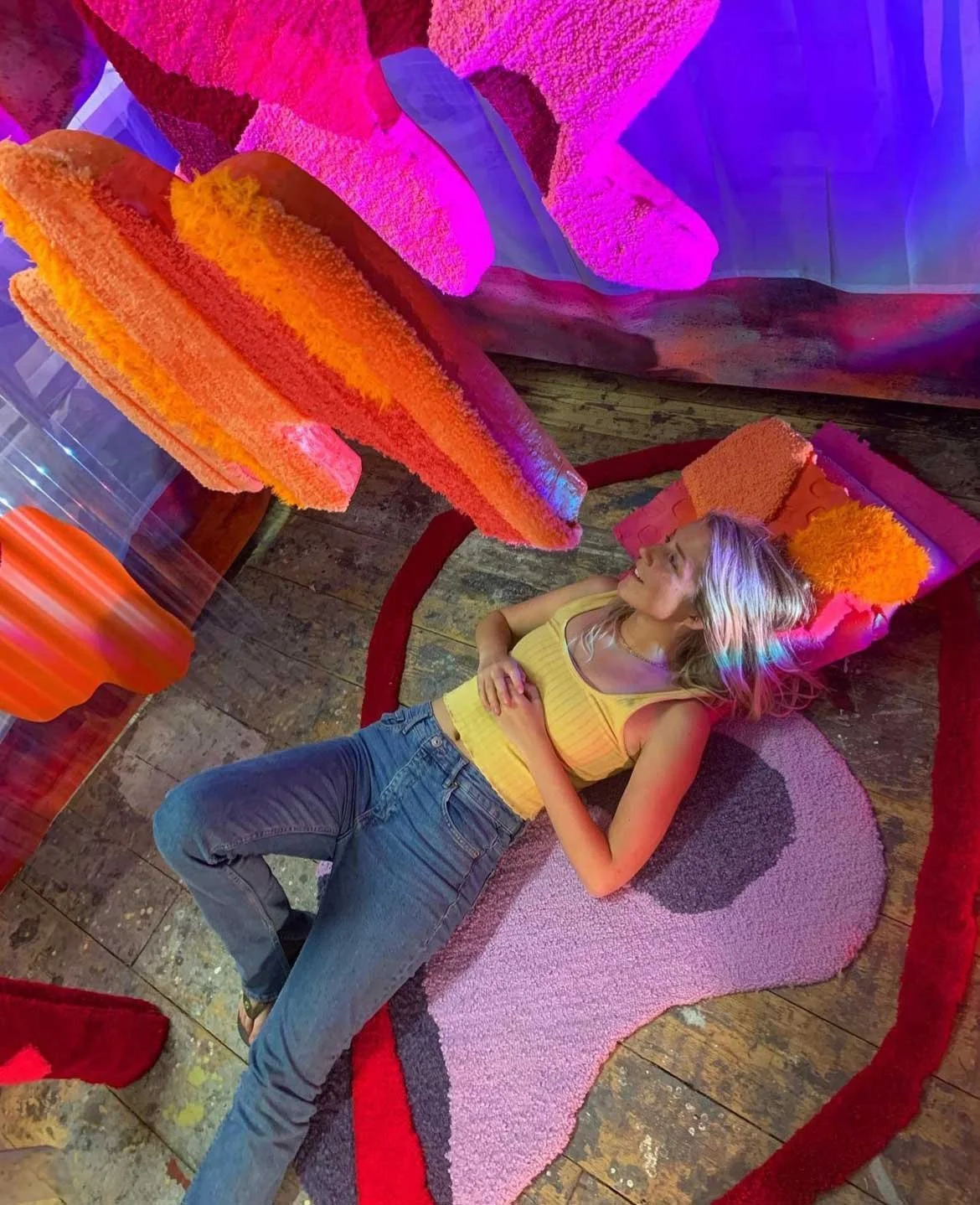
For anyone who has ever found themselves hypnotised by videos on social media, watching loops of colourful yarn neatly fill up the selected spaces, tightly compact together, in perfectly-formed ASMR-inducing rows - phew, right, calm down - there is a good chance they have just encountered ‘tufting’.
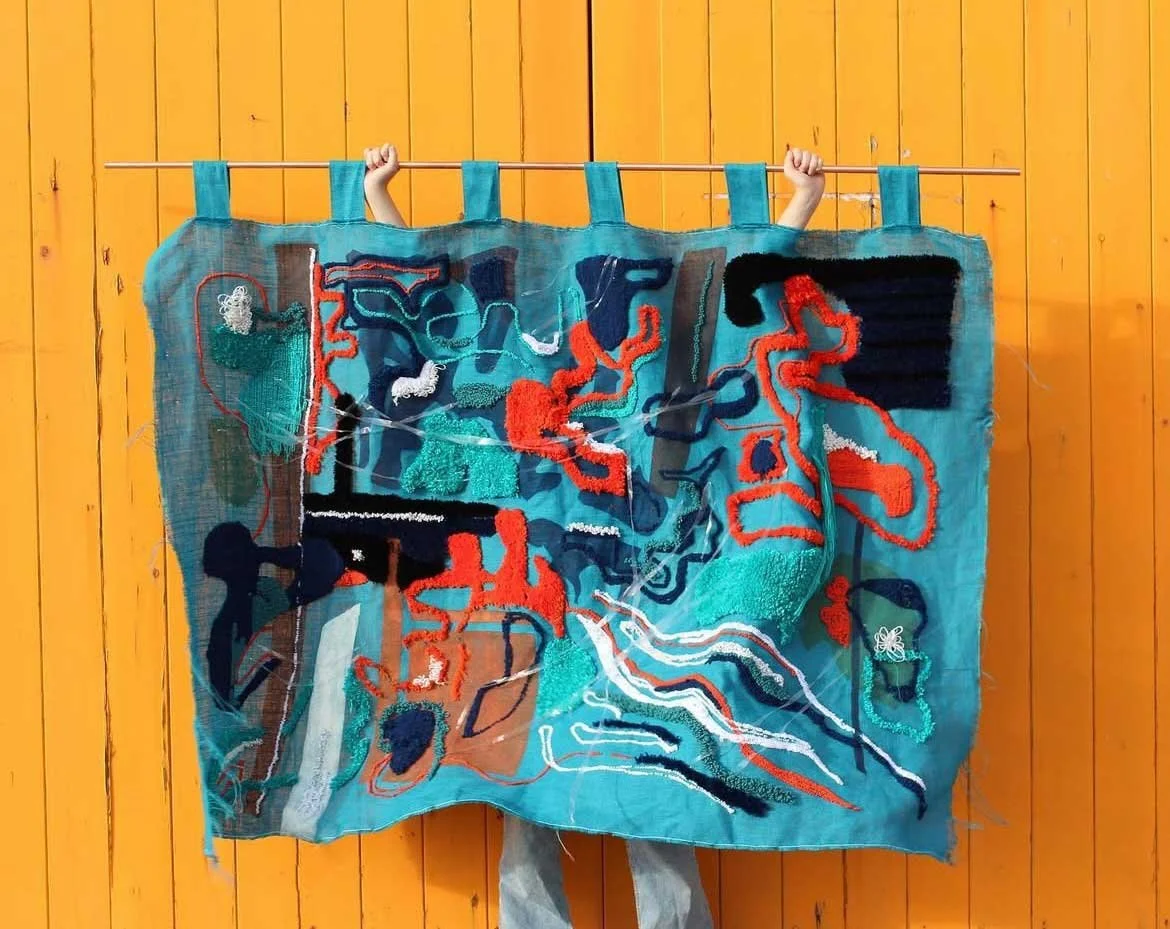
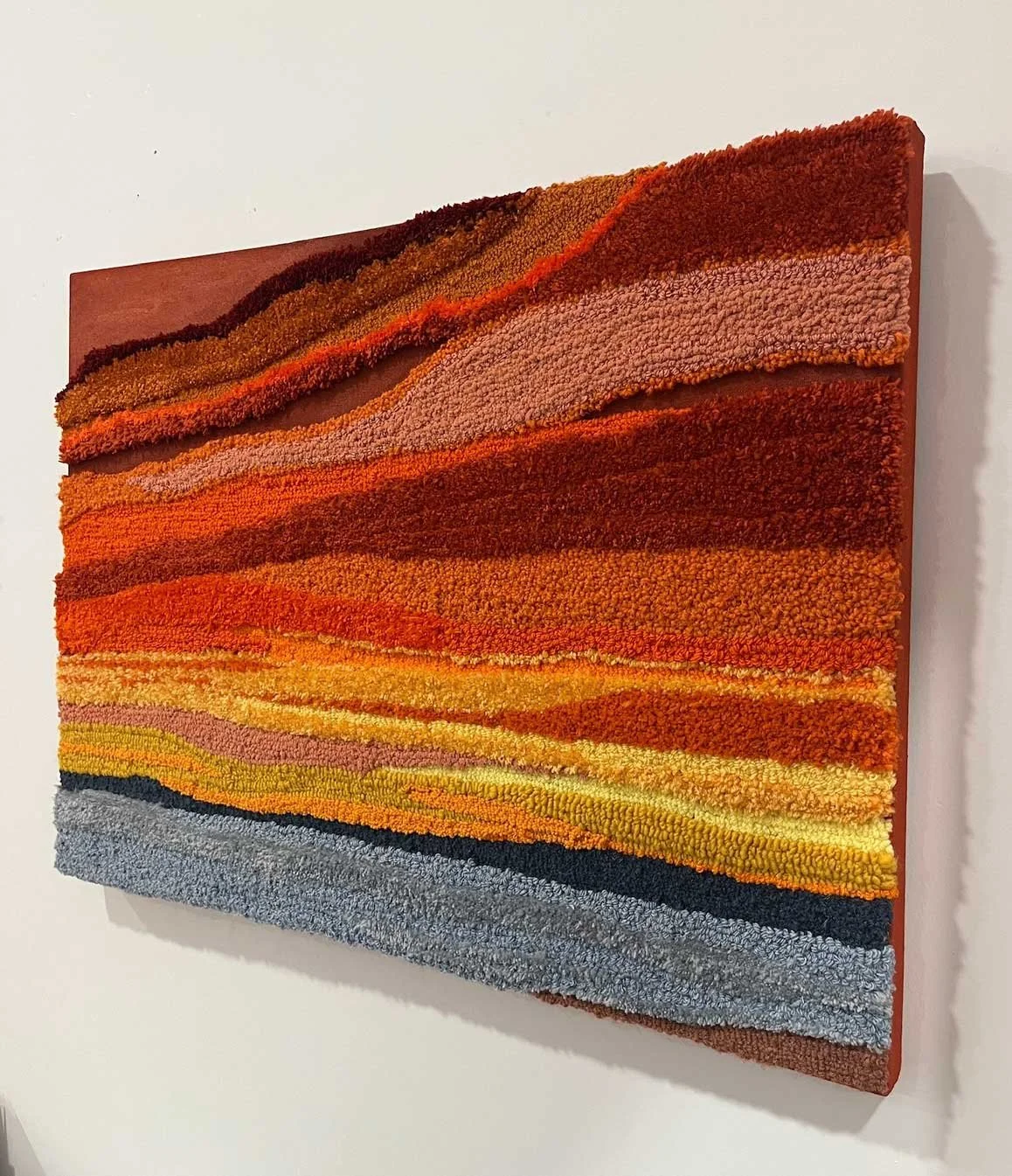
Bold, textured artworks with depth and literal feel, tufting has become the central artform of Margate’s Ellen Russell - better known online as Ellen Tufts. A textile designer and art teacher, Ellen has built a following through her vibrant, abstract creations and the strangely satisfying process behind them.
Growing up in Thanet, Ellen studied art throughout school, focusing largely on painting and landscapes before a foundation course changed her direction into textiles, a decision that led her into the world of print and pattern design, eventually studying textile design at the University of the Arts London. While many artists choose a single discipline, Ellen was drawn to the intersection between fine art and fabric.
“I’d specialised in print, so I was doing lots of screen-printing, surface pattern design,” she says. “It is kind of like art. You’re still drawing, painting and taking all of your art skills, but it’s more of a fabric base rather than paper.”
Then came Covid. Like countless creative graduates, Ellen found herself suddenly cut off from the specialist facilities on which her course depended. The screen-printing studios she loved were inaccessible and she returned home to Margate during lockdown.
“I was, like, how am I going to finish this degree?” she recalls. “I can’t screen-print from the spare room very easily.”
Searching for alternatives, she stumbled across something she had never seen before.
“I saw the videos for tufting. Kind of was like ‘Oh my god, what’s this? This looks really fun’.” Using remaining bursary money, she bought two tufting guns and began teaching herself.
“I hadn’t heard of it, but it had been around for a long time,” she says. “Right at the start, in the first lockdown, I had to get them shipped from Korea and there were like two videos on YouTube. That was literally it.”
The learning curve was steep. Ellen spent hours rewatching tutorials and experimenting through trial and error.
“It took me ages to learn because I was self-taught,” she says. “But now I think that helped me to be a better teacher for it because I had to go through all the ‘Oh no, don’t do that’ bits.”
Today, tufting has exploded in popularity, with tufting guns available for next-day orders online, but there are still plenty of people unfamiliar with the craft.
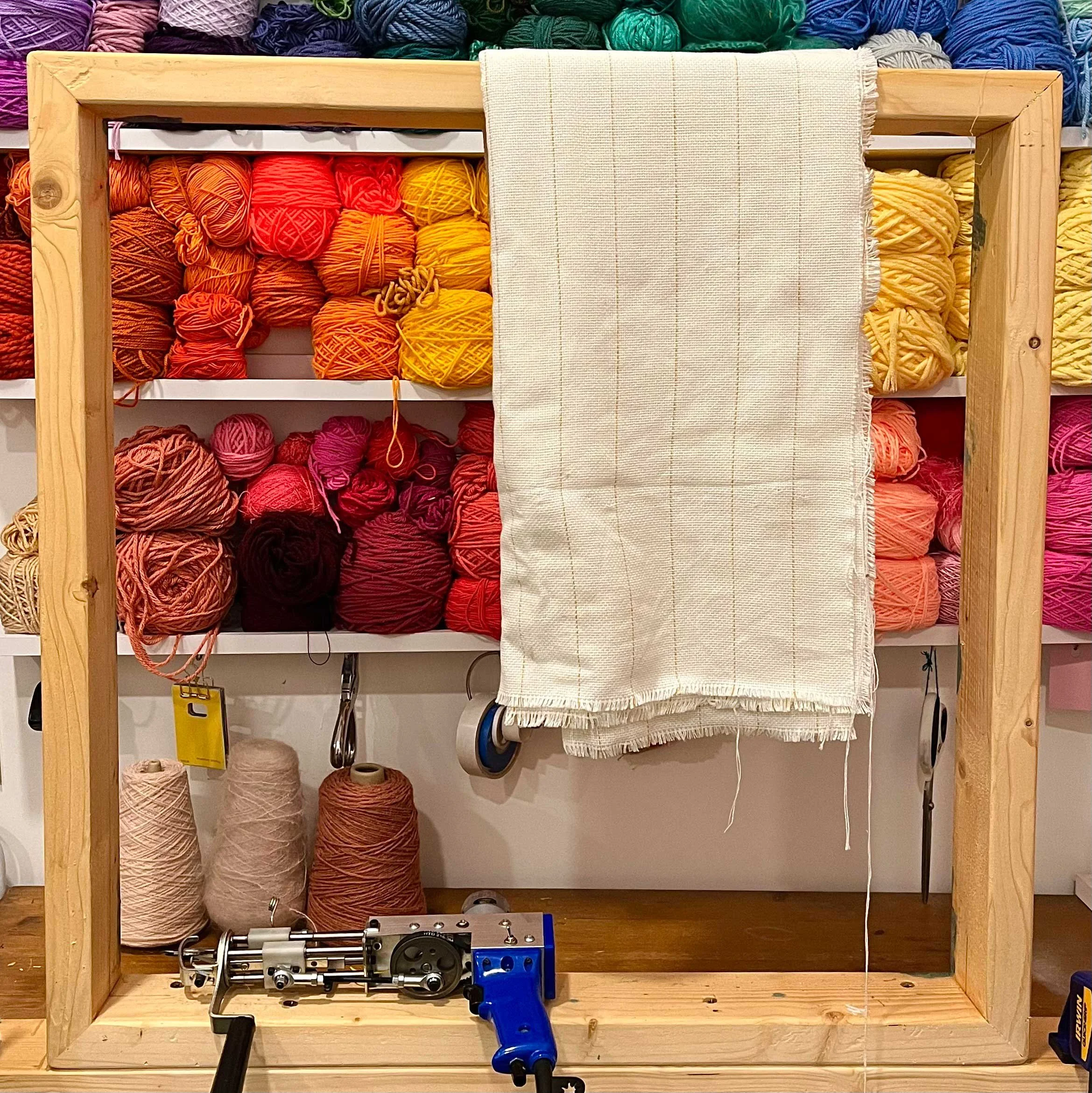
For the uninitiated, tufting involves feeding yarn through a handheld machine that rapidly punches loops into stretched fabric, creating a soft pile similar to a carpet or rug. It is mesmerising to watch. But far from just functional, Ellen enjoys the creative nature of producing the works.
“The yarn is the paint and the tufting gun is the brush,” she says.
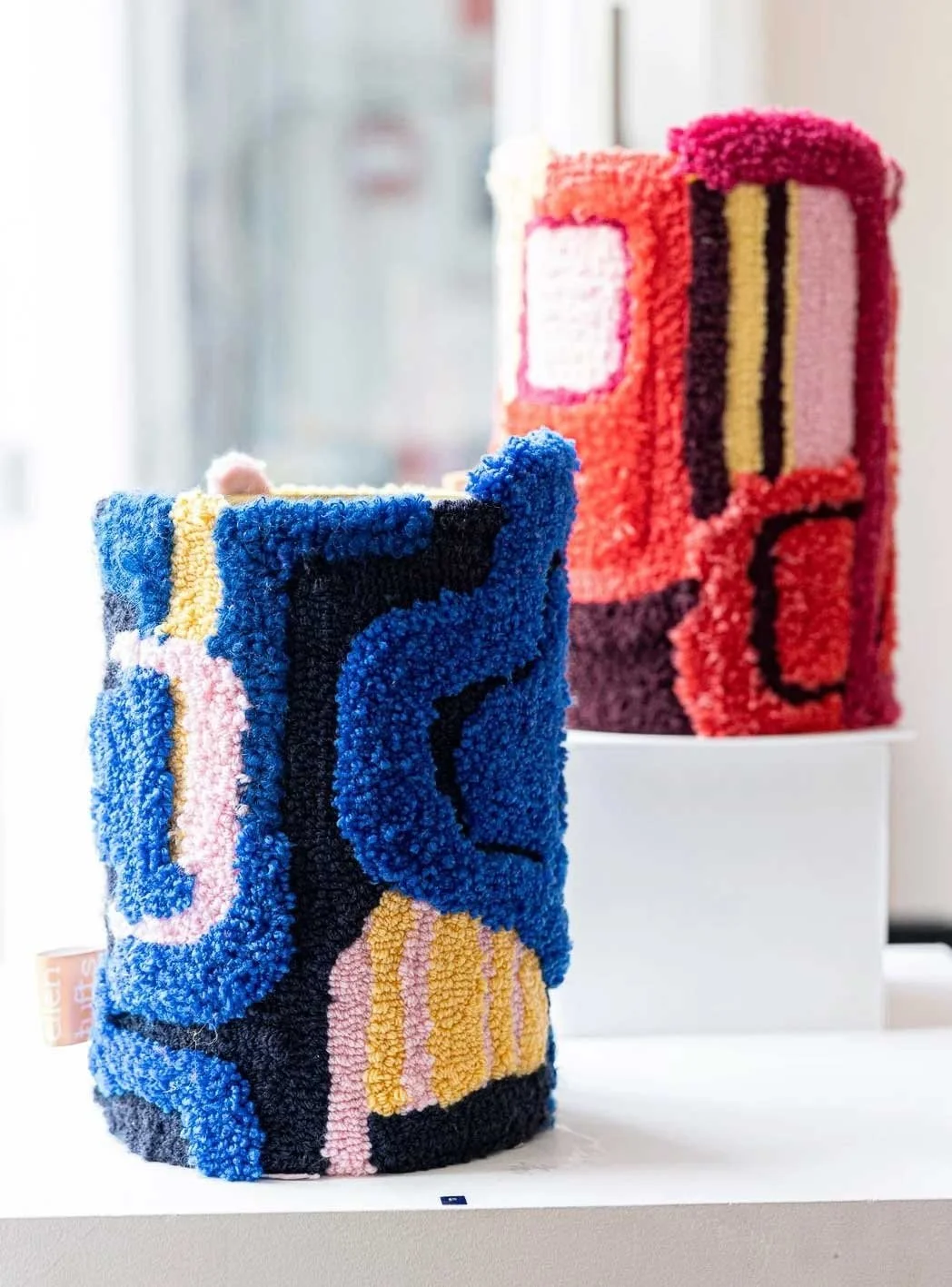
That artistic mindset shapes the work she produces. While tufting is commonly associated with rugs, Ellen is far more interested in decorative objects and wall-based pieces.
“I do really like doing the pots and vases,” she says. “I find them really satisfying.”
Working with a flat textile that is later wrapped around a three-dimensional form creates an element of surprise.
“You do it as a rectangle, but then once you put it round the pot it completely changes how it looks.” Functional products hold less appeal.
“People ask me for bath mats a lot,” she laughs. “What you’re creating is art, really. It’s not designed to compete with a high-street interiors shop.”
Her aesthetic is unmistakably her own. While some textile artists specialise in portraits or realistic imagery, Ellen is driven by colour, shape and abstraction.
“Probably warm, happy vibes,” she says, describing her style. “I’m always conflicted between really nice natural, neutral, faded, earthy colours, but then also I just absolutely love bright, crazy, fun, vibrant colours as well.”
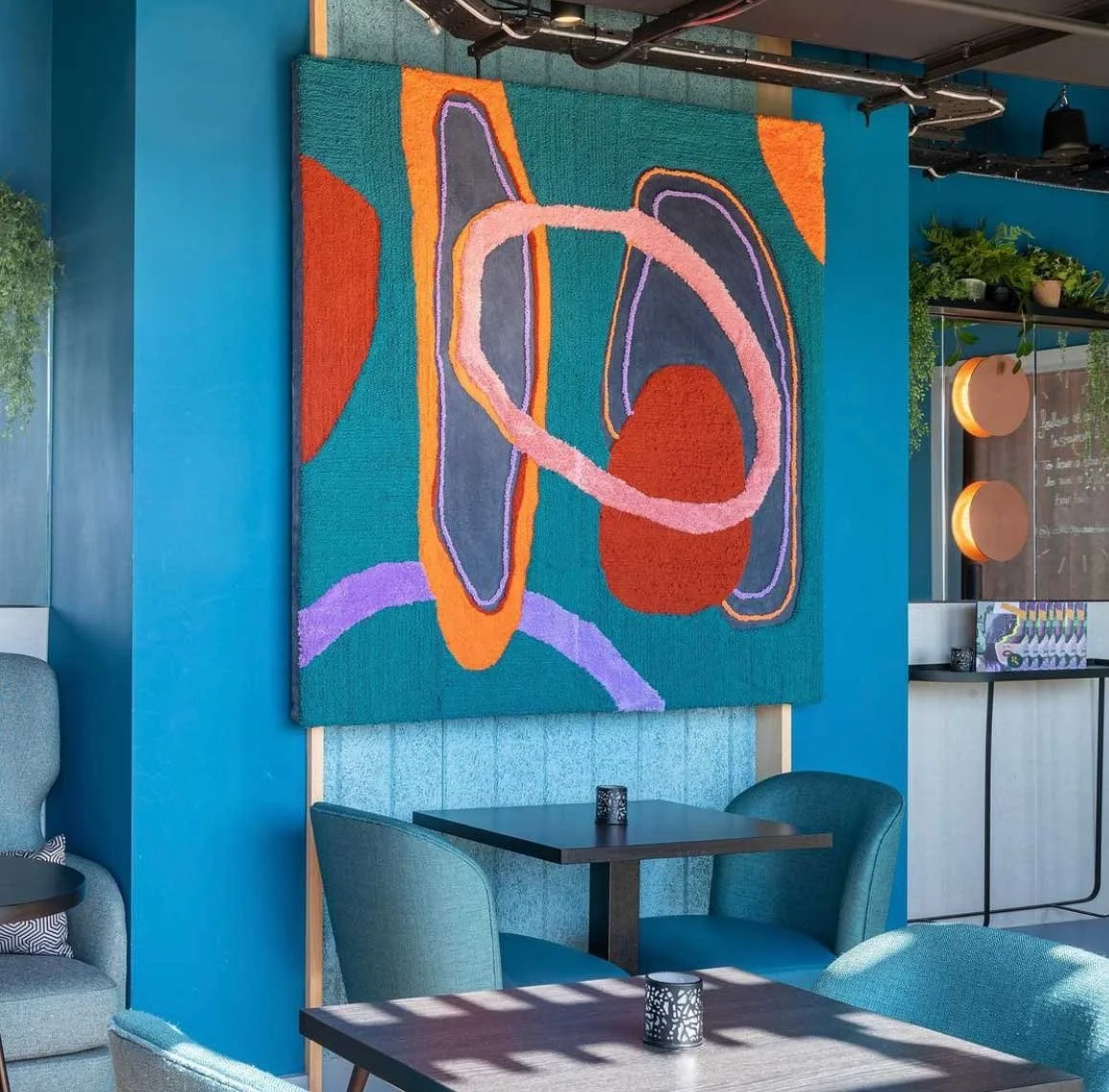
The influence of pattern remains central.
“It’s always more of an abstract pattern-driven [approach],” she says. “It’s more just about shapes and textures.”
That freedom allows intuition to play a major role in her process.
“What happens in the process dictates the design,” she explains. “It’s quite nice when you’re tufting, not knowing quite what you’re going to do.”
Despite its playful appearance, tufting has also opened commercial doors. Shortly after graduating, Ellen secured a significant commission for the Hyatt Place hotel in Aldgate, creating cushions, window graphics and a large-scale textile installation.
Yet part of tufting’s appeal remains the experience itself - both for the maker and for the audience watching online.
The repetitive motion of the machine, the neat lines of yarn appearing across the fabric and the dramatic reveal when a piece is finished have made tufting videos social-media gold.
“Tufting became a bit of a viral thing because people were watching the time-lapse videos and obviously really enjoying it,” she says. “It’s very satisfying to watch and do as well.”
That combination of artistry, experimentation and tactile pleasure may explain why her work continues to resonate. In a digital world dominated by fleeting content, there is something uniquely captivating about watching colour, texture and imagination slowly take shape, one tuft at a time.