Andrew Merritt’s bold vision to develop the world’s first intertidal allotment

Words by Joe Bill.
Images by Serena-Abbondanza, James Buttonshaw and Nicol Vizzoli
Just yards from my first home - the Ship on Shore pub in Sheerness - a hard border separating human influence and the wild has been concreted in. Some 20 feet high, the sea wall has acted as an imperative coastal protection for the town while simultaneously separating its inhabitants from the natural world beyond. That visual blockade is symbolic of the increased distance between locals in any British town and their wild areas.
Artist Andrew Merritt has built a career creating ambitious projects that blur the boundaries between art, architecture, ecology and community. Whether transforming an empty building into the acclaimed Farmshop food-growing project, helping establish the creative workspace Makerversity at Somerset House, or developing environmental initiatives that restore damaged landscapes, his work has consistently focused on creating practical artworks that communities can inhabit and build upon over many years.
His latest venture may be his most ambitious yet.
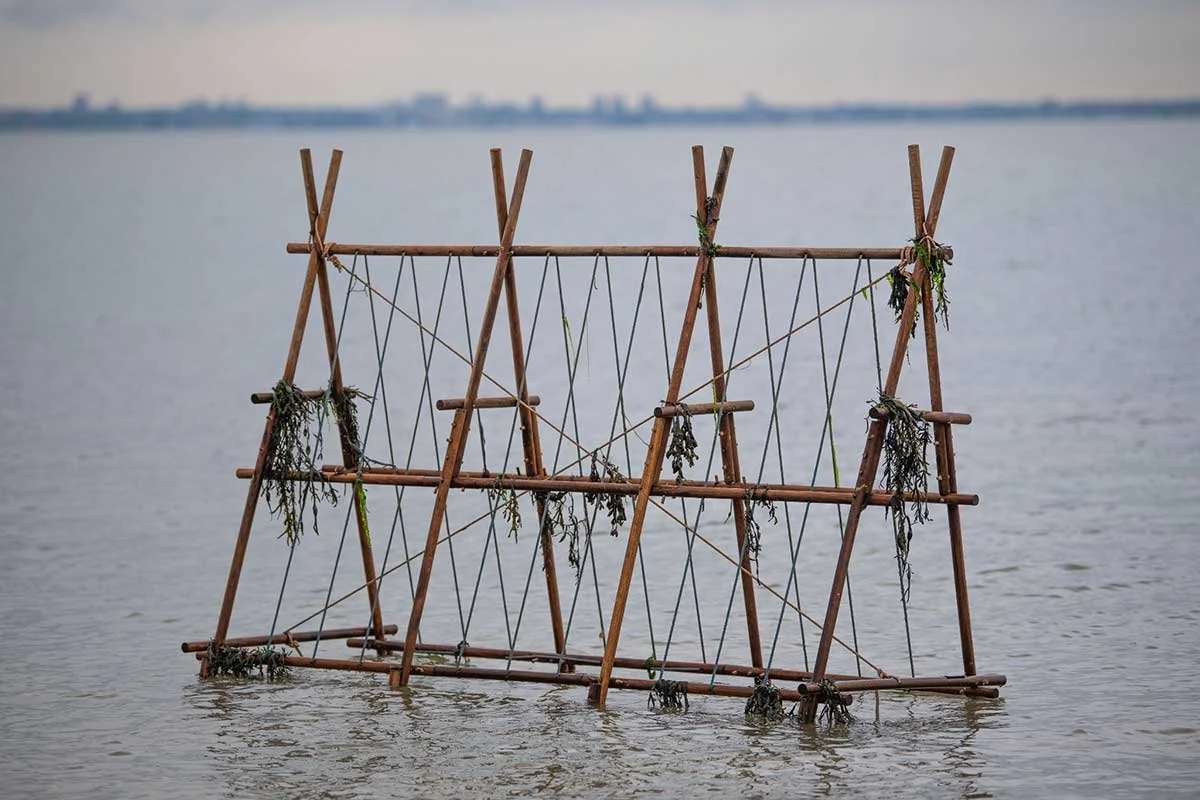
Intertidal Allotment aims to create what is believed to be the world’s first shoreline community allotment, transforming sections of the Isle of Sheppey’s tidal coastline into productive growing spaces for seaweed, shellfish and coastal plants while simultaneously restoring habitats, reconnecting people with the sea and developing a new model of coastal stewardship.
““I’m more interested in the situation that we’ve got now - not trying to go back to Eden…””
The long-term project recently received a hefty boost when Cement Fields secured £678,500 from The National Lottery Community Fund’s Climate Action Fund to develop the initiative between 2026 and 2031.
Yet the project’s origins were far removed from the vision now taking shape.
“Originally I had this idea to create an oyster reef with shopping trolleys,” Andrew explains. “I was obviously trying to look for a coastal location to do that. Someone put me in contact with Cement Fields and we started to work together to explore doing that. We essentially just got to a point where we felt it wasn’t the right thing to do.
“The next stage was that I just started walking along the whole of the north Kent coast with the idea of doing something but not knowing what and where.”
That exploratory walk eventually brought him to the island
“I stopped when I got to Sheppey,” he says. “I stopped because I knew this was the place. A lot of the coastline of Kent is either too built up and there isn’t any potential there, in my eyes anyway, or it’s too wild, so there’s no connection to people, whereas Sheppey had a nice combination of the two.”
It was the island’s imposing sea defences that first captured his imagination.
“I originally studied graphic design, but my work’s very architectural installations and I was just struck by these massive, massive walls, which I both liked and obviously recognised as an issue as well.
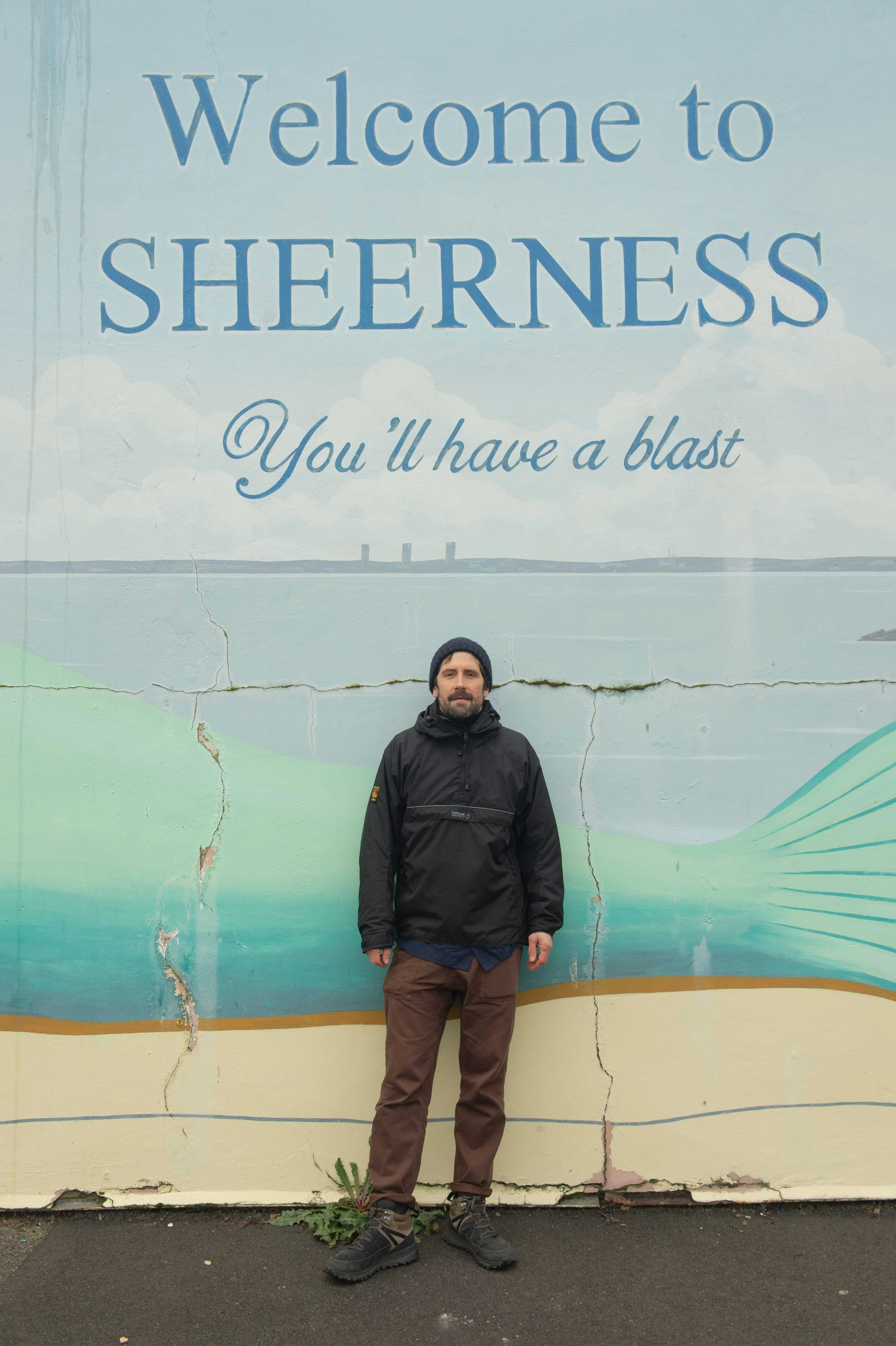
“They’re also destroying people’s interaction with the sea because it’s literally a wall between the town and the sea. It’s obviously protected Sheerness, but it’s also had adverse effects on Sheerness at the same time, so I was just interested in that."
For Andrew, the concrete barriers represent a global dilemma rather than simply a local one.
“I was interested about how you can bring that into play somehow to make it a community but also natural space. I’m interested in that juxtaposition. There’s lots of rewilding projects, but they tend to try to wipe that clean and go back to what it used to be like.
“I’m more interested in the situation that we’ve got now - not trying to go back to Eden but trying to find another way forward that brings this former world and the present day back together again in some kind of weird hybrid way.”
That thinking evolved into the idea of an allotment in the intertidal zone.
“I just thought a way into this was that allotments in this country are one of the only places where there is self-build architecture, where it’s this nice hybrid of community organisation but also individual expression.
“It was a very simple idea, really. It’s just bringing that into a completely different area, into the coastline. Humanity supposedly evolved along the coastline and along rivers because they are some of the richest places to provide food. But then we’ve done the exact opposite to them and destroyed those areas.”

Creating something entirely new, however, has meant there has been no template to follow.
“There isn’t really any blueprint to do that because it hasn’t been done before,” Andrew says. “So it’s just been working on it for the last few years, trying to figure out how best to go forward, including bringing people of Sheppey on board with that and moving forward all together.”
The practical challenges have proved just as significant as the conceptual ones.
Unlike a traditional allotment enclosed within a fence and managed by an individual tenant, an intertidal allotment exists within one of Britain’s most tightly regulated environments.
“It’s challenging because the coastline is nearly all owned by the Crown Estate. Then you’ve got all these other bodies like the Port of London Authority, marine wildlife reserves and public access.
“An allotment is normally a fenced-in thing controlled by an individual. But it’s not going to be your typical allotment.”
For Andrew, navigating those relationships has become an essential part of the artwork itself.
“That’s what the project’s partly doing. You’ve got the art side of it, you’ve got the food side of it, but also you’re just trying to break down walls and find ways forward on something that hasn’t been done before,” he says.
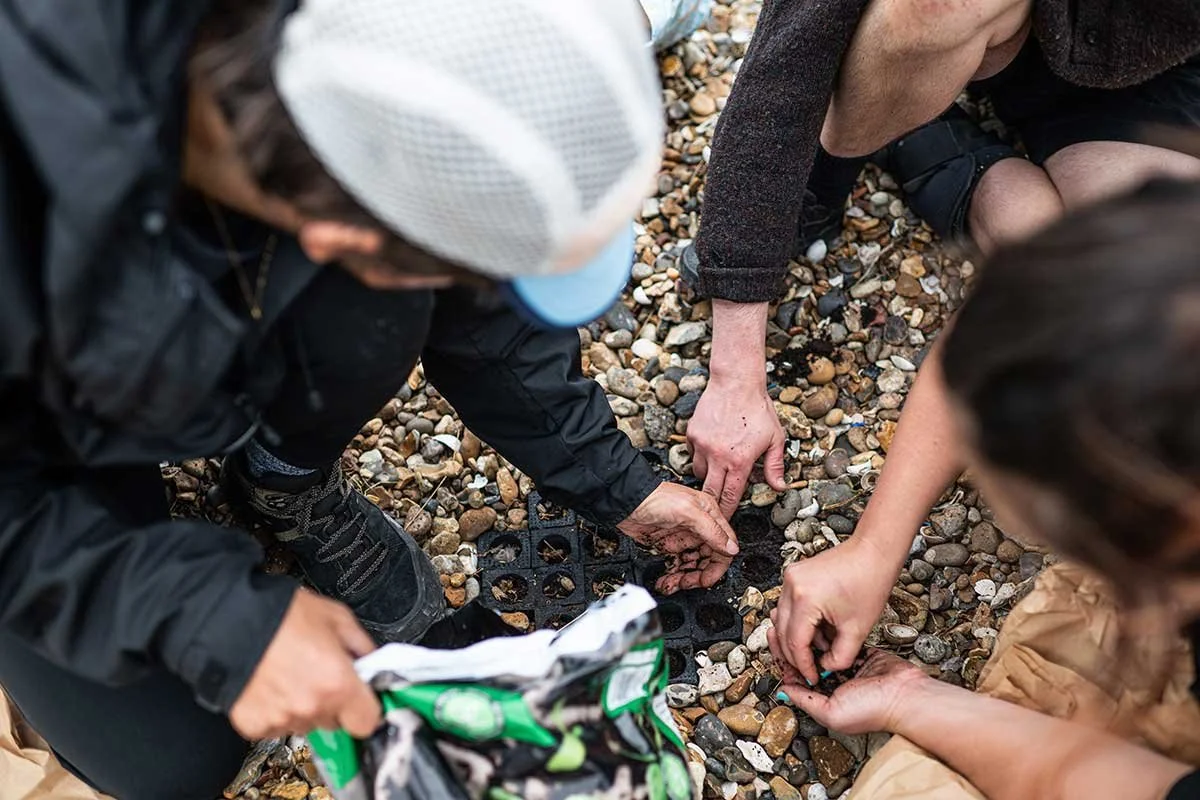
“A lot of the work to date has been building relationships with all the different local authorities and organisations as well and building up trust. Time has been quite a major thing, and that was part of what I committed myself to from the start - that this was going to be a long-term project. And that’s fine, because I’m interested in what kind of legacy you’re actually building, and the best way of doing that is by committing time to it.”
The sea itself has also become an uncompromising teacher.
“The first stage was just learning what survived essentially, including materials and structure design, because things were just getting battered by the waves. We started in the worst place possible, which was perfect because now I understand the limits.
“Installing these things is also different. You don’t go at low tide to install something. You go way before low tide because you’ve got to follow that water out rather than arrive when it’s already turning and coming back in.”
Those hard-earned lessons will now inform the next phase. Having previously focused on a single prototype site near Marine Parade and The Ship on Shore, the project will expand across multiple locations around the island, with plans for a headquarters and production centre in Sheerness where structures can be built, propagated and eventually maintained by local people.
The ambition extends well beyond creating an unusual public artwork.
"The end game is that we will be feeding people and we will be providing more habitat for coastal ecologies,” Andrew says. “We will be building different structures that, as a starting point, follow the kind of land allotment vernacular and then change that to suit the sea environment.
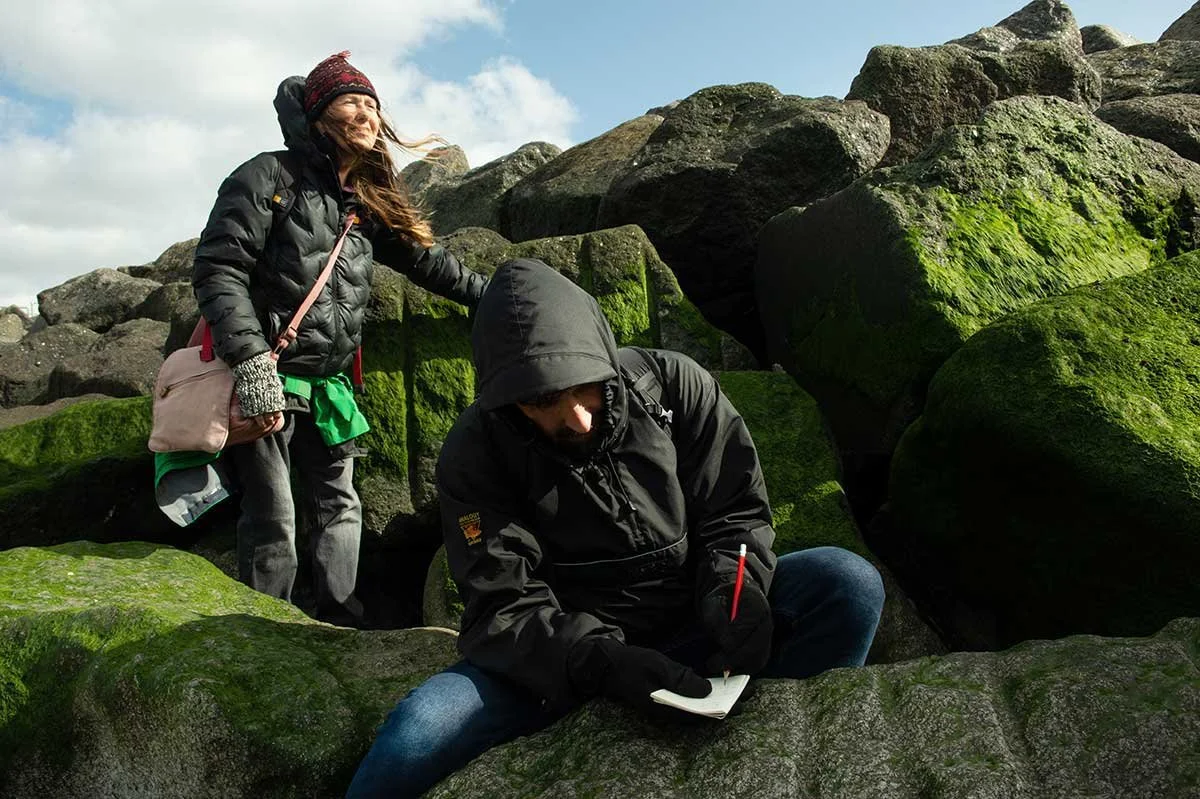
“The coastline has been destroyed so much that it needs a helping hand, essentially.”
Central to that vision is ensuring the project ultimately belongs to the community rather than its creator.
“What we want to do is have, in five years’ time, structures and a structure of an organisation that can be passed on to the people of Sheppey and then also have a replicable model that can work in other sites.”
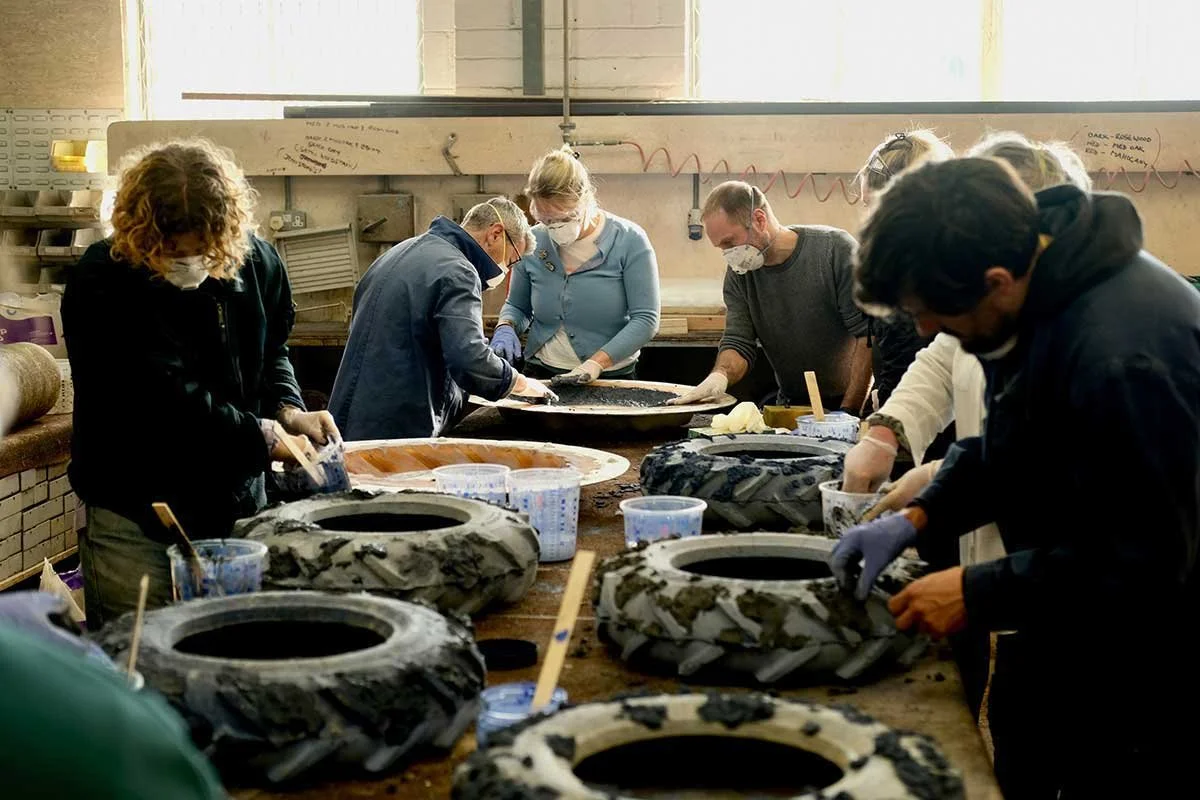
To achieve that, skilled craftspeople will initially fabricate structures before passing on their knowledge to local young people, while gardeners, seaweed specialists and other experts help establish a self-sustaining network of caretakers and growers.
Andrew says public engagement has already demonstrated the idea’s broad appeal.
“From the start we’ve been going to local fetes and events. I’ve done quite a lot of projects over the years now and you get a sense of when something’s working and when something isn’t working. It’s been really positive. The more we understand the lie of the land and all these different groups that are there, then we know how to navigate that."
For a project that began with an abandoned idea involving shopping trolleys and oyster reefs, the destination has become something far more ambitious: not simply an artwork but a living coastal infrastructure designed to outlast its creator. If Andrew’s vision succeeds, the Isle of Sheppey will become both home to the world’s first intertidal allotment and the blueprint for how coastal communities elsewhere might one day rethink their relationship with food, nature and the changing shoreline.
https://www.cementfields.org/projects/andrew-merritt-intertidal-allotment